Welcome to Dezhou Huaxiang new material technology Co., Ltd. official website

Difference between woven geotextile and non-woven geotextile
Release time:
2024-07-24
Woven geotextiles and non-woven geotextiles each have their own benefits and are suitable for different application scenarios. If a project requires high tensile strength and reinforcement, such as road construction or structural applications, then a woven geotextile may be more appropriate. If a material with high permeability is needed for filtration or drainage, or if a more flexible installation is required, a non-woven geotextile may be more appropriate. The final choice depends on your specific project needs, such as load-bearing requirements, soil type, drainage needs and environmental conditions.
What is non-woven geotextile?
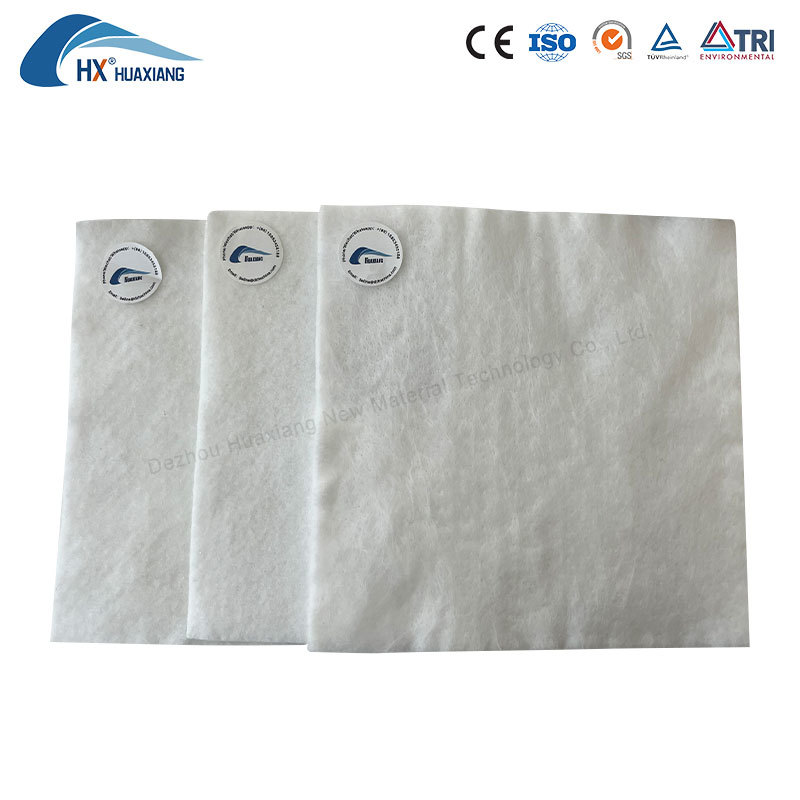
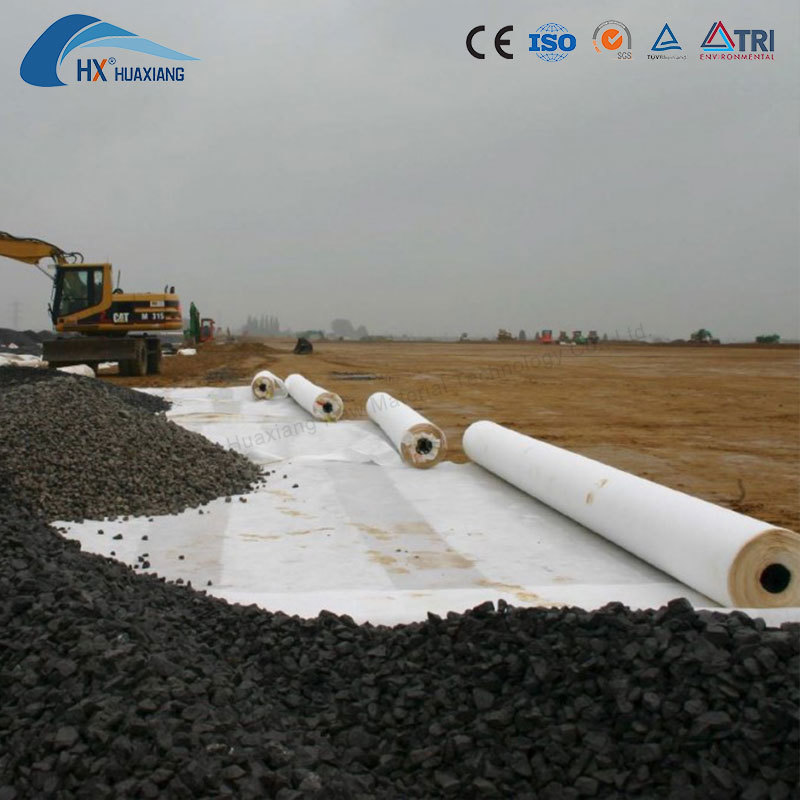
Geotextile, also known as geotextile, is a permeable geosynthetic material made of synthetic fibers by needling or weaving. The finished product is in the form of cloth, generally 4-6 meters wide and 50-100 meters long. Geotextile is divided into woven geotextile and non-woven geotextile. Geotextile has the function of filtration, drainage, isolation, reinforcement, seepage control, protection, etc. It has the characteristics of light weight, high tensile strength, good permeability, high temperature resistance, frost resistance, aging resistance and corrosion resistance.
 |
 |
What is a woven geotextile?
Woven geotextiles are synthetic materials that are commonly used in civil engineering and construction projects to provide stabilization, reinforcement, filtration, separation and drainage. They are usually woven from synthetic fibers (such as polypropylene or polyester), are strong and durable, and usually have a mesh-like structure.
Difference between woven and non-woven geotextiles
Nonwoven geotextile and woven geotextile both belong to a kind of geotextile, their difference mainly lies in the material and production process.
Material comparison: non-woven geotextile material for polyester, polypropylene, nylon and other synthetic fibers, high-temperature melting, spinning, non-woven and other composite processes; spun geotextile by fiber textiles and polyester, polypropylene and other polymer materials composite.
Comparison of production processes: non-woven geotextile made of hot air or needle punching two processes, hot air process is to melt the fibers blown into a non-woven fabric, needle punching process is the use of needles to reinforce the fiber layer, textile geotextile made of weaving process.
 |
 |
 |
Advantages and Disadvantages of Woven Geotextiles and Nonwoven Geotextiles
Advantages and disadvantages of non-woven geotextile
The advantages of non-woven geotextile are light weight, soft, good water permeability, easy processing and construction, high tensile strength, good corrosion resistance, but its quality is not stable enough, easy to be affected by environmental factors, and shorter service life.
Advantages and disadvantages of woven geotextile
The advantages of woven geotextile are more stable mechanical properties, high tensile strength and corrosion resistance, and longer service life than non-woven geotextile, but this kind of geotextile is heavier, and its water permeability and flexibility are poorer than that of non-woven geotextile, and it is easy to be destroyed and damaged.
Applicable scenes of woven geotextile and non-woven geotextile
Application of non-woven geotextile:
The application areas of nonwoven geotextiles include:
Filtration and Drainage: Because of their air permeability and moisture permeability, nonwoven geotextiles are commonly used in drainage systems to help moisture pass through while preventing soil particles from entering the drain.
Soil separation: In road and construction projects, non-woven geotextiles are used to separate different types of soil or materials, preventing mixing and ensuring structural stability.
Erosion control: They are used as part of erosion control measures to help retain soil in areas such as slopes and stream banks.
Vegetation protection: Nonwoven geotextiles can be used as a base for vegetation to grow, allowing moisture and air to enter while preventing weeds from growing. Nonwoven Geotextiles
Fabric properties include flexibility, ease of cutting and laying, and high air permeability. They are suitable for applications that require high permeability and some strength. Key factors when selecting a nonwoven geotextile include water permeability, tensile strength, puncture resistance and durability.
 |
 |
 |
Applications for woven geotextiles:
Woven geotextiles are used in a variety of scenarios including:
Road construction: for road base reinforcement to prevent mixing of base and sub-base materials and to avoid road damage.
Dams and retaining walls: In these applications, woven geotextiles provide reinforcement and additional stability.
Erosion control: by acting as a barrier, they help control soil erosion in areas such as stream banks and slopes.
Filtration and drainage: they allow water to pass through while preventing soil particles from clogging drainage systems.
Foundation Stabilization: In areas with weak or unstable soils, woven geotextiles can improve load distribution and reduce soil movement.
Woven geotextiles are known for their high tensile strength and resistance to stretching, making them ideal for heavy-duty applications. They come in a variety of weights and constructions with specific properties for different project needs. Choosing the right woven geotextile depends on factors such as load-bearing requirements, environmental conditions and project longevity.
Non-woven geotextiles are suitable for scenarios such as land works, highway works, construction works, etc., where the soil needs to be reinforced and stabilized to prevent destabilization, and can also be used as a waterproofing layer, acoustic layer, filtration layer and so on. Woven geotextile is suitable for water conservancy, hydropower, coastal protection, landscaping, highway tunneling, etc. It can be used as seepage control dam, flood control dam, water conservancy project, earthwork, environmental protection project, landscaping and greening.
Woven geotextile and non-woven geotextile have their own advantages and are suitable for different application scenarios. Below is a brief description of these two types of geotextiles to help you select the right geotextile for your project needs:
Woven Geotextiles:
Strength: usually with high tensile strength and ductility resistance, suitable for scenarios requiring high bearing capacity and reinforcement.
Application: commonly used in road construction, foundation reinforcement, embankments and retaining walls.
Isolation: It can effectively prevent the mixing of different soil layers and provide a strong barrier.
Non-woven geotextile:
Flexibility: more flexible, easy to cut and install, suitable for scenes with complex shapes or limited space.
Filtration and drainage: with high permeability, it is suitable for filtration and drainage.
Applications: commonly used for erosion control, filtration in drainage systems, soil separation in landscape projects, etc.
In short: If your project requires high tensile strength and reinforcement, such as road construction or structural applications, then woven geotextiles may be more appropriate.
If you need a material with high permeability for filtration or drainage, or a more flexible installation, a non-woven geotextile may be more appropriate.
The final choice depends on your specific project needs, such as load-bearing requirements, soil type, drainage needs and environmental conditions. If you have a project that requires both nonwoven and woven geotextiles, please contact us. Our engineers will be online 24 hours a day to provide you with professional services and can also provide you with free geotextile samples.
PROJECT CASES

Apr 25,2024
Apr 25,2024
Apr 25,2024
Apr 25,2024
Apr 25,2024
Apr 25,2024
Apr 25,2024
Apr 25,2024

Get a quote or fast support
Experienced teams of project experts will provide you with competitive quotes, best service and free samples.
Contact us now
CONTACT US
Tel : +86-158 5345 5188
WhatsApp : +86-158 5345 5188
Wechat : +86-158 5345 5188
Email : Selina@dzhxchina.com
Factory Address: South head of Xingguo Street, Lingcheng District Economic Development Zone, Dezhou City, Shandong, China