Welcome to Dezhou Huaxiang new material technology Co., Ltd. official website

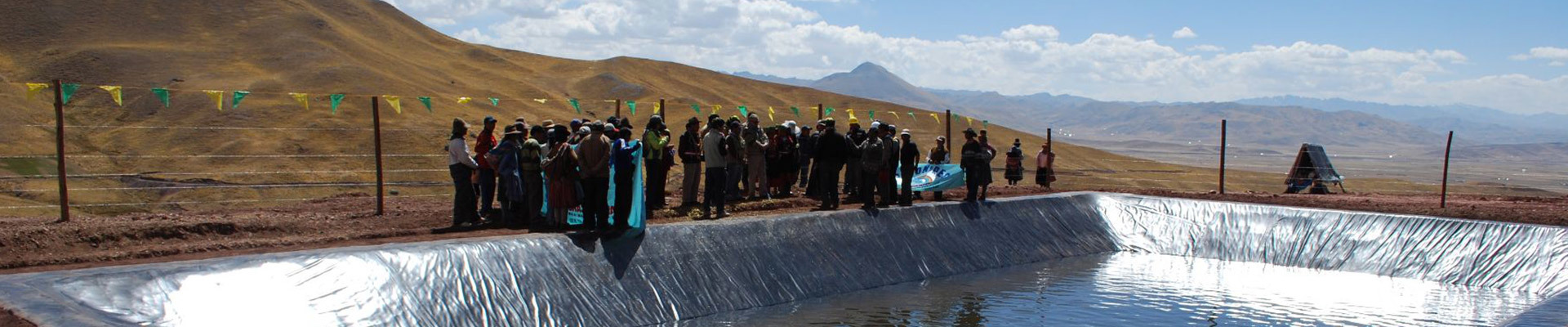
Why is a geomembrane liner needed for aquaculture (e.g. fish ponds, shrimp ponds)?
Release time:
2024-08-09
Geomembrane liners are a cost-effective solution that outperforms soil, clay or concrete lined fish/shrimp ponds. All the benefits of installing a geomembrane liner will improve agricultural yields, agricultural quality and project profitability.HDPE geomembrane liners are the best choice for building fish or shrimp ponds in aquaculture.
What is HDPE Geomembrane Liner and what are the applications and advantages of HDPE Geomembrane? Why it can be used as shrimp/fish pond liner? How to choose the right item such as shrimp/fish pond liner? And how to find reliable suppliers? The following article will detail your basis for selecting a geomembrane liner.
What is HDPE geomembrane?
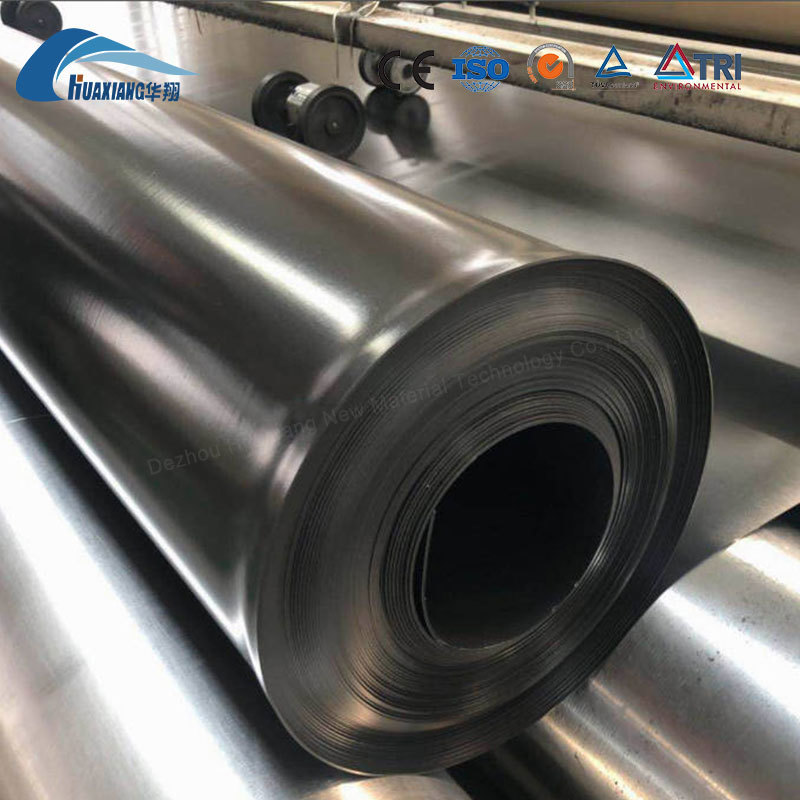
HDPE Geomembrane is a new type of geotechnical product which is very stable and does not pollute the environment, so it is used in many industrial fields.HDPE Geomembrane (full name is High Density Polyethylene Geomembrane) is made of high quality polyethylene raw material. The raw material of high quality polyethylene is 100% virgin resin.
HDPE geomembrane selects the best quality resin, in addition, in the production process of HDPE geomembrane also added a certain proportion of other substances, carbon black, ultraviolet absorber additive makes the geomembrane has a good anti-ultraviolet performance, anti-aging agents, antioxidants, stabilizers, and other substances added so that the product will not be aging, and will not seep out of the toxic substances.
Therefore, it has good characteristics and service life in practical use.
The production process of geomembrane mainly has two kinds, calendering and blown film, the difference between the geomembrane produced by the two processes is not very big, all have good light aging resistance and anti-stress wear performance.
 |
 |
 |
Application of HDPE Geomembrane
As mentioned above, HDPE geomembrane liners are made of high quality virgin resin (100% raw material) and a variety of reinforcing performance materials with anti-oxidant, anti-aging and UV resistance.
Below are several applications of geomembranes:
Sanitation engineering: domestic waste landfill, sewage treatment, disposal of toxic and hazardous substances, storage of dangerous goods.
Construction engineering: subway, building underground engineering, roof cisterns, roof gardens, sewage pipelines and so on.
HDPE geomembrane is the best choice for lining fish ponds and shrimp ponds, and can also be used for sea cucumber ring slope protection, etc.
Why geomembrane liners can be used as shrimp/fish pond liners
HDPE Geomembrane Liner is a new environmentally friendly material.HDPE Geomembrane Liner contains UV-resistant substances and therefore resists the deterioration of UV rays for many years.HDPE Geomembrane Liner is flexible, rolls up and is fused or glued together during the installation process.This is why we can say that HDPE Geomembrane Liner is the best choice for aquaculture applications such as fish pond liner or shrimp pond liner. This is why we can say that HDPE geomembrane liners are the best choice for aquaculture applications such as fish pond liners or shrimp pond liners.
According to experimental data and real agricultural applications, HDPE geomembrane liners are the best choice for lining fish or shrimp ponds. Safe and reliable materials are important for the growth and health of fish and shrimp, and HDPE geomembrane liners make storage, circulation and management of shrimp ponds and fish farm ponds easier. The use of HDPE geomembrane liners saves fishermen money and time, and also increases productivity. Therefore, we recommend the use of HDPE geomembrane liners as the best pond liner as a realistic foundation for shrimp farm ponds or fish farm ponds.
Geomembrane products suitable for shrimp/fish pond liners
Geomembrane liners can be produced in thicknesses from 0.3mm-3mm. However, geomembrane liners with a thickness of 0.5mm - 2mm are preferred for practical projects. For fish pond liners and shrimp pond liners, 0.5mm-1mm geomembrane liners are most popular. Incidentally, the recommended thickness for shrimp pond liners is at least 0.75mm. You can choose a 0.5mm, 0.75mm or 1mm geomembrane liner depending on whether it is a fish pond liner or a shrimp pond liner.
Geomembrane liners are packaged and delivered in rolls, so you will also need to choose the width and roll length of the geomembrane liner. Typically, geomembrane liners are available in widths ranging from 3m-8m. 5.8m is the most popular width as it is exactly the width of a 20ft container. As for roll lengths, geomembrane liners can be cut into rolls of up to 50m to hundreds of meters. 100m, 150m and 200m roll lengths are all popular. The 100m, 150m and 200m roll lengths are all popular, so you can choose the length you need.
Quality suppliers of HDPE geomembrane liners can guarantee that their products will last 5 to 10 years under normal conditions. Therefore, always check the quality certification and after-sales service of the product to avoid purchasing recycled material geomembrane liners.
How to recognize the quality of geomembrane?
High-quality geomembranes are made from 100% raw materials, but some dishonest merchants will use all kinds of means to reduce the cost and cheat customers in order to make bigger profits.
The first situation that people encounter is selling second-hand goods at the best price, which means that the geomembrane is not made with 100% original raw materials, but with unknown recycled resins. These recycled resins are made from complex raw materials, including medical waste, oil drums, and more. These geomembranes made from recycled resins may contain viruses, heavy metals, hazardous chemicals, and other impurities. Moreover, the quality of recycled resin geomembranes is unstable. If the recycled geomembranes are used in seepage control projects or farming, the result is that pollutants will precipitate out of the excavated geomembranes, which is harmful to the soil, the groundwater, and the human body.
The second common pitfall trick is that the thickness of geomembrane is not up to standard. In order to save costs and make more money, some suppliers will reduce the thickness of the customized geomembrane or reduce the amount of raw materials added. This affects the thickness and quality of the finished geomembrane, resulting in the quality or weight of the geomembrane not being up to the standard it should be.
The third pitfall that may be encountered is that the specifications of the geomembrane product do not meet the standard, especially the length. For example, the labeled geomembrane roll length is about 100 meters, but the actual length may only be 90 meters. Generally speaking, it is difficult for customers to find a suitable place to measure the length. Therefore, some suppliers will take advantage of this to save costs. In this way, the customer's profit will be reduced. For example, a 5.8m*100m geomembrane roll can be produced as 5.8m*90m or 5.8m*95m, which can also save 5-10% of the cost.
The above three situations are the usual tricks of some dishonest sellers, you must be careful when buying, do not be deceived by some unscrupulous merchants.
Otherwise, if you care about the data and have the conditions and equipment to test the quality of the product, you will find that the high-quality geomembrane liners made from raw materials have excellent test performance. A good geomembrane liner will meet ASTM GIR standards as well as CE ISO certification.
Geomembrane Construction Considerations
As mentioned earlier, the recommended thickness of the geomembrane liner is at least 0.75 mm.
The geomembrane construction process is as follows:
Construction preparation site treatment → laying → welding → fixing → protective measures.
When actually constructing a shrimp pond liner or fish pond liner, we should use plastic to line the bottom and embankment of the pond to prevent contact with acidic sulfate soils in order to avoid low pH values of the bottom and water, which may cause problems for shrimp or fish ponds, especially during the rainy season.
By using a geomembrane as a fish pond liner or shrimp pond liner, pond water quality is easier to manage because contact with bottom and bank soils does not negatively impact pond water quality. Geomembrane liners prevent soil-water interactions, prevent soil acidification problems, prevent salinization of adjacent areas, and control seepage from fish/shrimp ponds in areas with high water tables.
Precautions:
1, Geomembrane construction can be carried out in a humid environment, but must avoid the environment is too humid, avoid directly immersed in water.
2、When there is moisture on the ground, drainage measures must be done before laying to prevent water from causing geomembrane welding;
3、Don't drag the geomembrane during transportation to avoid being stabbed by sharp objects.
4、When loading and unloading, according to the principle of handling, it is strictly prohibited to throw, drag, roll, pry, damage.
5、The product should be stored in a cool and dry place, prohibit sunshine and rain.
Geomembrane construction temperature requirements
1. The temperature should be above five degrees Celsius.
2. The wind should be below four levels.
3. In bad weather conditions, such as windy days, workers should take measures to ensure that the HDPE geomembrane to be welded can be pressed down by heavy objects or equipment.
Overview of geomembrane application in aquaculture
In short, geomembrane liners offer the following benefits:
-Assists in maintaining water quality.
-Assists in controlling soil and water erosion.
-Reduces maintenance costs.
-Reduces the risk of disease.
-Prevents loss of dissolved oxygen.
-Improves the working environment.
In recent years, the aquaculture market, especially shrimp market is very extensive and intensive. The use of HDPE geomembrane liners for fish pond liners, shrimp pond liners and tanks has played a key role in improving aquaculture productivity, especially in Asia, and has become an industry best practice. Geomembrane liners are a cost-effective solution that outperforms soil, clay or concrete lined fish/shrimp ponds. All the benefits of installing a geomembrane liner will improve agricultural yields, agricultural quality and project profitability.
So, in conclusion, we can say that HDPE Geomembrane Liner is the best choice for building fish or shrimp ponds in aquaculture.
PROJECT CASES

Apr 25,2024
Apr 25,2024
Apr 25,2024
Apr 25,2024
Apr 25,2024
Apr 25,2024
Apr 25,2024
Apr 25,2024

Get a quote or fast support
Experienced teams of project experts will provide you with competitive quotes, best service and free samples.
Contact us now
CONTACT US
Tel : +86-158 5345 5188
WhatsApp : +86-158 5345 5188
Wechat : +86-158 5345 5188
Email : Selina@dzhxchina.com
Factory Address: South head of Xingguo Street, Lingcheng District Economic Development Zone, Dezhou City, Shandong, China