Welcome to Dezhou Huaxiang new material technology Co., Ltd. official website

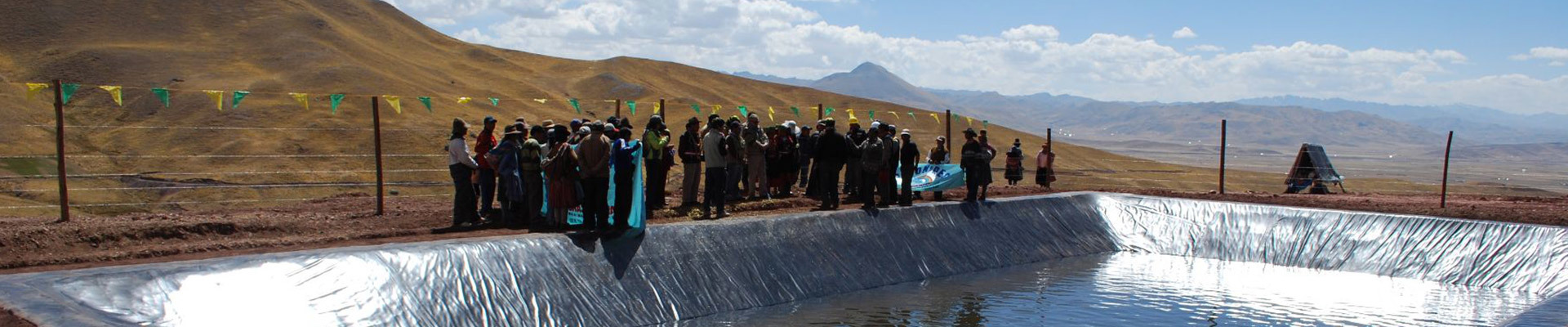
Geomembranes in oil and gas applications
Release time:
2024-08-12
Geomembrane is an effective impermeable plastic liner that can hold different liquids such as water, oil, waste liquids and toxic substances. Liners are commonly used to store wastewater in evaporation ponds and reservoirs. Along with other containment equipment, geomembrane liners will help complete projects that last more than 30 years. As an HDPE pit liner, geomembranes have the distinct property of holding oil drilling fluids and drill cuttings, thus preventing groundwater contamination.
Benefits of using pond liner in oil field:
1. impermeable barrier between oil and ground to protect groundwater.
2. puncture resistance.
3. UV resistant for longer life when exposed to sunlight.
4. customized roll sizes according to project requirements.
5. superior chemical resistance and maximum flexibility.
6. available in thicknesses from 0.5 mm to 3.0 mm on request.
What does the petroleum industry look like?
The petroleum industry, also known as the oil industry or the oil patch, includes the global process of exploring, extracting, refining, transporting (usually by tankers and pipelines), and marketing petroleum products. The industry's largest products are fuel oil and gasoline (gasoline). Petroleum is also the raw material for many chemical products, including pharmaceuticals, solvents, fertilizers, pesticides, synthetic fragrances, and plastics. The industry is typically divided into three main segments: upstream, midstream, and downstream. Upstream involves the exploration and extraction of crude oil, midstream includes the transportation and storage of crude oil, and downstream involves the refining of crude oil into a variety of final products.
Oil is vital to many industries and is necessary to sustain the current industrial civilization, and is therefore of critical importance to many countries. Oil accounts for a significant portion of the world's energy consumption, ranging from a low of 32% in Europe and Asia to a high of 53% in the Middle East.
Consumption patterns in other geographical regions are as follows: South and Central America (44%), Africa (41%) and North America (40%).
1. 36 billion barrels (5.8 cubic kilometers) of oil are consumed annually worldwide, with developed countries being the largest consumers.
2. the production, distribution, refining and retailing of oil is the world's largest industry by value.
3. the oil and gas industry spends only 0.4% of its net sales on research and development (R&D), which is the lowest percentage compared to a range of other industries.
4. governments such as the United States provide substantial public subsidies to oil companies, offering significant tax breaks at all stages of oil exploration and extraction, including the cost of oil field leases and drilling equipment.
In recent years, enhanced recovery technologies (most notably multi-stage drilling and hydraulic fracturing) have come to the forefront of the industry as this new technology plays a crucial and highly controversial role in new methods of oil extraction.
 |
 |
 |
 |
Millions of liters of oil and industrial fluids and hydrocarbons are stored in the tanks of oil depots and refineries. These industrial fluids are highly corrosive to acids and alkalis, and once leaked, the consequences for the surrounding land environment are unimaginable. The use of geomembranes, impermeable membranes, geotextiles, waterproof blankets, geogrids and other geosynthetically engineered environmental protection materials to construct a second layer of isolation and impermeability can isolate and block land contamination caused by leaking or ruptured oil tanks. Environmental protection laws and petroleum regulations in many countries around the world require oil depots, refineries, oil storage systems must be used HDPE impermeable membrane (high-density polyethylene geomembrane) to establish its impermeable body system. Due to the petroleum industry liquid corrosiveness is very strong, the use of corrosion resistance, acid resistance, alkali resistance of good quality polyethylene geomembrane is the most effective and appropriate method, not only the construction is simple, easy to transport, reduce the cost of the project, and plays an irreplaceable role.
Petrochemical seepage control project can be used in the materials are clay, waterproofing materials, steel fibers and synthetic fibers, high-density polyethylene (HDPE) membrane, geotextile, sodium bentonite waterproofing blanket, etc., the width of the anchoring groove is usually 0.4m ~ 1.0m, the depth of 0.4m ~ 1.0m, groove edge folded into the groove, with stone, backfill, or cement fixed.
Petrochemical enterprises commonly used seepage control materials
1. natural clay
Natural clay refers to clay soil with less sand particles. Clay is generally weathered from surface silicate minerals. Clay mineral particles are fine, often colloidal particle size range, crystalline or amorphous, most of them are flaky, a few are tubular, rod-shaped. Natural clay has poor impermeability and is generally laid in the bottom layer of the impermeable layer.
2. impermeable concrete
Impermeable concrete generally refers to the impermeable grade of P6 concrete, according to the impermeable pressure is different, impermeable concrete can be divided into P6 level, P8 level, P10 level, P12 level. The main way to improve the seepage resistance of impermeable concrete is to increase the compactness of the concrete, thus reducing the flow of water through the channel.
As an anti-seepage material, anti-seepage concrete has the following advantages:
(1) impermeable concrete has both the two major characteristics of building materials and impermeable materials;
(2) anti-seepage concrete raw materials from a wide range of sources, the price is low;
(3) The construction method of impermeable concrete is simple and easy to master.
(4) impermeable concrete can be added by adding additives or mixed with other materials to improve its impermeability;
(5) impermeable concrete is easy to find structural defects, and easy to repair.
3. Bentonite
Natural bentonite is divided into calcium-based bentonite and sodium-based bentonite two categories, of which sodium-based bentonite water expansion performance than calcium-based bentonite strong, can be expanded to its own volume of 15 to 17 times, so the actual application of sodium-based bentonite.
Sodium bentonite as impermeable material has the following advantages:
(1) sodium bentonite can form a highly dense diaphragm in contact with water, low water permeability, water retention performance.
(2) sodium bentonite is a natural material, will not cause pollution to the surrounding environment, not easy to aging, corrosion, impermeability is not limited by the ambient temperature, waterproof performance is long-lasting.
(3) sodium bentonite construction process is simple, construction quality is easy to check, defects are easy to repair.
(4) sodium bentonite has the property of water expansion, and concrete with the use of concrete, can repair the concrete due to vibration, settlement and small cracks.
4, geomembrane
Geomembrane is made of high-density plastic film and non-woven fabric composite seepage control materials. At present, the plastic film material used for the production of geomembrane is mainly high-density polyethylene (HDPE), and the geotextile material is polyester fiber (PET). In addition, in order to increase the stability of the geomembrane, light stabilizers, antioxidants and other additives can be added to the polymer material.
Geomembrane as seepage control material has the following advantages:
(1) High-density plastic film has good tensile strength, corrosion resistance, stability, and water solubility.
(2) Fabrics made of polyester fiber have high tensile strength, elongation and integrality, good hydraulic properties, good isolation properties and sealing properties.
(3) According to the research of International Geosynthetics Association, the expected life of HDPE geomembrane can be up to 220 years under normal conditions of about 30°.
Geomembrane (HDPE seepage control membrane) is made of high-quality HDPE virgin resin, supplemented with carbon black, anti-aging agent, antioxidant, ultraviolet absorber, stabilizer and other auxiliary materials, and produced with advanced equipment. All products are produced in accordance with the U.S. GRI standards and ASTM test standards, complete specifications, glossy seepage control membrane and brown seepage control membrane, thickness 0.25mm-3.0mm, width 6m, and can be customized according to customer requirements. Meet the municipal environmental protection, water conservancy engineering, garden construction, petrochemical mining, construction engineering, salt industry, agriculture, aquaculture and other industries seepage control application requirements.
Application Fields:
1, municipal environmental protection: landfill, domestic waste landfill, hazardous waste landfill, solid waste landfill, kitchen waste landfill, construction waste landfill, incineration power plant fly ash landfill, power plant ash landfill, slag landfill, slag ash field, coal gangue landfill, sewage treatment plant.
2, water conservancy projects: reservoirs, artificial lakes, reservoirs, drinking water pools, landscape water systems and irrigation systems dams, channel engineering horizontal seepage control, vertical seepage control, slope seepage control; ports, wharves, cofferdams, seawalls around the sea seawall seepage control.
3, agriculture and aquaculture: pig farms, chicken farms, duck sheds and other livestock and poultry manure treatment, biogas digesters, aquaculture ponds, fish ponds, shrimp ponds, lotus ponds, snapper ponds, lobster ponds and other lining seepage control.
4, oil mining: oil pipeline protection, petrochemical refineries, oil storage tanks, oil wells, sludge ponds, chemical reaction pools, sedimentation ponds, tailings dams, hazardous waste landfill, solid waste landfill substrate, secondary lining seepage control; slag landfill, slag ash field, gangue landfill, ash field, ash field, tailings dams, tailings ponds, red mud piles, heap leach pads, dissolution ponds, sedimentation ponds, wastewater treatment plants, and so on.
5、Food and chemical industry: salt industry desalination, salt crystallization ponds, brine pool covering, salt film, and other seepage control; sugar industry sugar storage tanks.
6、Construction engineering: human defense system, underground corridor, subway, underground garage, roof garden, sewage pipe seepage control.
In the petrochemical industry, mining industry, environmental protection seepage control, HDPE seepage control membrane gradually replace the traditional concrete, plastic, metal containers. Traditional concrete, plastic, metal containers high cost, short service life, seepage control effect is poor, HDPE seepage control membrane is a high-performance waterproof leakage control products, especially its chemical resistance, acid and alkali resistance, salt, heavy oil, molecular stability, is the chemical field and the mining industry, especially harmful, toxic stockpiling, storage places for seepage control, leakage control of the best products.
PROJECT CASES

Apr 25,2024
Apr 25,2024
Apr 25,2024
Apr 25,2024
Apr 25,2024
Apr 25,2024
Apr 25,2024
Apr 25,2024

Get a quote or fast support
Experienced teams of project experts will provide you with competitive quotes, best service and free samples.
Contact us now
CONTACT US
Tel : +86-158 5345 5188
WhatsApp : +86-158 5345 5188
Wechat : +86-158 5345 5188
Email : Selina@dzhxchina.com
Factory Address: South head of Xingguo Street, Lingcheng District Economic Development Zone, Dezhou City, Shandong, China