Welcome to Dezhou Huaxiang new material technology Co., Ltd. official website

What are the materials required to install a geocell on a slope?
Release time:
2024-08-15
The installation of geocells helps to improve slope stability, reduce soil erosion, protect the ecological environment, reduce maintenance costs, promote sustainable land management, and reduce engineering risks, and has a wide range of application prospects in the fields of civil engineering, environmental protection, and land management.
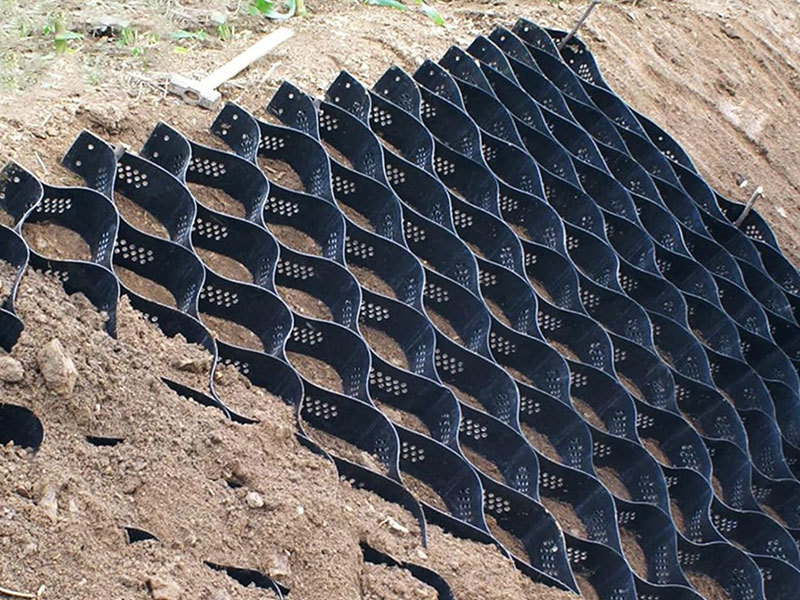
1. Geocell: This is the primary material used to enhance slope stability and reduce soil erosion. Geocells are usually supplied in sheets or rolls.
2. Rooting Nails or Anchor Bolts: These are used to secure the geocell and prevent it from moving or shifting during backfilling. Used at the edges of the geocell.
3. backfill material: this is the material that fills the space inside the geocell. Backfill materials used include soil, concrete or gravel. The material selected should be based on project needs and design requirements.
4. manual tamping or compaction equipment: used to compact the backfill material to ensure that it achieves the required density and stability.
5. Knives or scissors: Used to trim and adjust geocells to fit the shape and size of the slope. These tools can be used to cut geocell sheets or rolls.
6. measuring equipment (e.g. rangefinders or measuring tools): if required to accurately measure the dimensions of the slope to ensure proper geocell coverage.
7. Edge protection material (optional): Sometimes the installer may need to add more edge protection material to prevent damage to the geocell edges at the top or bottom of the slope.
8. Other safety equipment (as required): Depending on the work environment and safety regulations, appropriate safety equipment such as gloves, helmets and goggles may be required.
 |
 |
 |
How to install geocells on slopes?
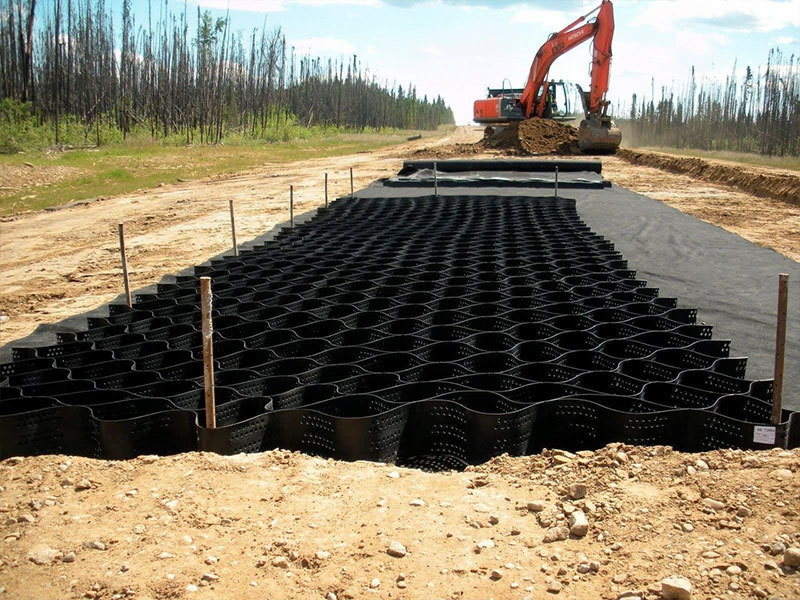
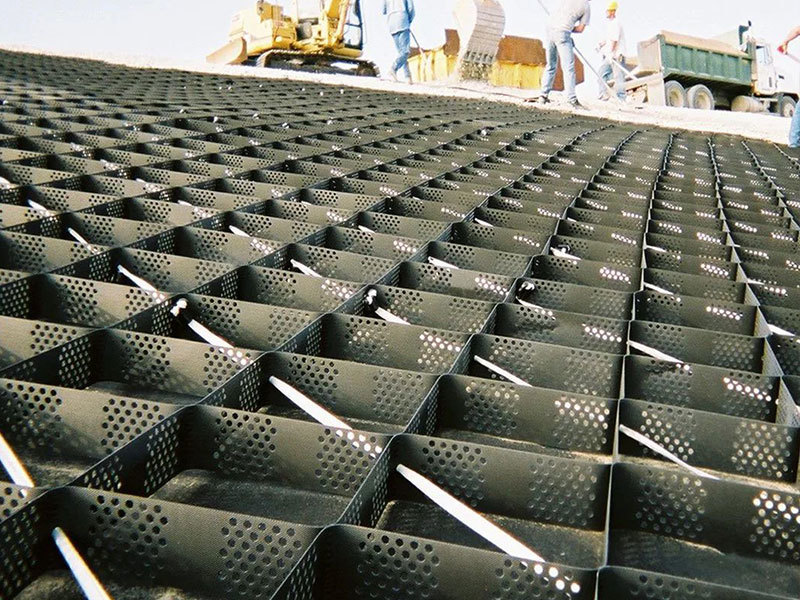
The slope must be laid from top to bottom, from the top of the slope downward, before laying, the slope surface must be cleared of debris and sundries to avoid tearing the sheet when laying. Pay attention to unfolding when laying, that is, the honeycomb grid must be unfolded and tightened to maintain a complete honeycomb grid state, and to play the role of the sheet on the soil, vegetation fixation.
1. Site Preparation: Remove vegetation, debris and loose soil from the geocell installation area. Take measurements to determine the dimensions of the slope and ensure proper coverage of the geocell.
2. unfolding or placing the geocells: after the geocells are transported to the construction site, the workers must unfold the folded chambers (some fibrous materials, such as geotextile fabric, geotextile cloth, non-woven fabrics, etc., can be laid underneath the geocells according to the actual situation of the construction site)
3. Fixing the geocell: Use root nails, anchors or other suitable methods to fix the geocell on the slope. These should be placed around the perimeter of the geocell to prevent movement or displacement during backfilling.
4. Backfill material: Using load-bearing machinery at the construction site, granular objects are filled until they are full and extend beyond the top of the geocell, then vibrated or rolled to complete the subgrade. Proper compaction is critical to slope stability.
5. Grooming and Vegetation: Once the desired slope stability is achieved, the surface can be groomed according to the project specifications. This includes adding topsoil and planting vegetation to further enhance slope stability and prevent erosion.
6. Inspection and Maintenance: After construction is complete, the grids should be inspected from start to finish for any missed grids in order to maintain the long-term stability of the slope.
Geocell installation extension:
The laying of the roadbed is horizontal, and should be laid in accordance with the direction of the force of the roadbed, avoiding laying on the uneven road base, such as soft soil roadbed, uneven gravel roadbed, because the geocell should give full play to its strength, and its role is to ensure that the laying layer of the premise of the good flatness. In addition, after laying geocells on the roadbed, before backfilling, vehicles are prohibited from passing on it, the bearing capacity of the cell without backfilling is limited, and it can't withstand the passage of heavy vehicles, and it must be disassembled and backfilled, and the soil quality is enough to pass the vehicles.
PROJECT CASES

Apr 25,2024
Apr 25,2024
Apr 25,2024
Apr 25,2024
Apr 25,2024
Apr 25,2024
Apr 25,2024
Apr 25,2024

Get a quote or fast support
Experienced teams of project experts will provide you with competitive quotes, best service and free samples.
Contact us now
CONTACT US
Tel : +86-158 5345 5188
WhatsApp : +86-158 5345 5188
Wechat : +86-158 5345 5188
Email : Selina@dzhxchina.com
Factory Address: South head of Xingguo Street, Lingcheng District Economic Development Zone, Dezhou City, Shandong, China