Welcome to Dezhou Huaxiang new material technology Co., Ltd. official website

Main uses of HDPE geomembranes and LLDPE geomembranes
Release time:
2024-08-26
Geomembranes HDPE (High Density Polyethylene) are made on the basis of high density polyethylene.HDPE geomembranes have high strength properties.HDPE geomembranes are used in the construction of waterproofing and anticorrosion coatings on surfaces such as liquid and solid industrial waste storage facilities, solid waste landfills, concrete, brick, metal, etc., including potable water tanks. Geomembranes LLDPE (Linear Low Density Polyethylene) are made from linear low density polyethylene.LLDPE geomembranes are resilient.LLDPE geomembranes are used for the construction of structures in submerged soils, the location of unauthorized and abandoned landfills, the recycling of solid domestic and industrial waste landfills, waterproofing tunnels, and other underground facilities. Because LLDPE geomembranes are flexible, they can solve tasks that rigid HDPE geomembranes cannot. Depending on the specific project requirements, HDPE geomembranes and LLDPE geomembranes are available in thicknesses ranging from 0.2 to 3 mm. HDPE geomembranes and LLDPE geomembranes are available in 5.0 or 6.0 meter wide rolls. The length of the rolls depends on the thickness of the material.
Waterproofing for Hazardous Waste Landfills HDPE geomembranes and LLDPE geomembranes allow you to create an airtight “bag” that prevents the release of hazardous gases into the atmosphere as well as the seepage of toxic materials into the soil.
- Walls in the ground. Vertical trenches up to 40 meters deep are filled with bentonite slurry and the HDPE geomembrane is immersed in the solution and connected using a special blocking system. This vertical HDPE geomembrane barrier prevents leakage through the ground.
- Sewage storage tanks for industrial and agricultural enterprises. Solid waste collectors (ash piles in thermal power plants, sludge storage, manure storage, municipal dumps, cemeteries).HDPE geomembranes and LLDPE geomembranes are the most efficient and cost-effective waterproofing materials for protecting the soil from aggressive substances.HDPE geomembranes and LLDPE geomembranes guarantee the protection of waste liquid collectors as well as the contamination of the soil and groundwater. Geomembranes HDPE and geomembranes LLDPE with a thickness of 2 mm have sufficient strength and elasticity, as well as excellent resistance to the effects of temperature and ultraviolet radiation, which makes it possible to form artificial containers of almost any area, volume and configuration.
- Seepage protection for oil tanks, farms, parking lots, and highways. The use of HDPE geomembranes and LLDPE geomembranes in the construction of the foundations of oil tanks reduces soil contamination in emergency situations.
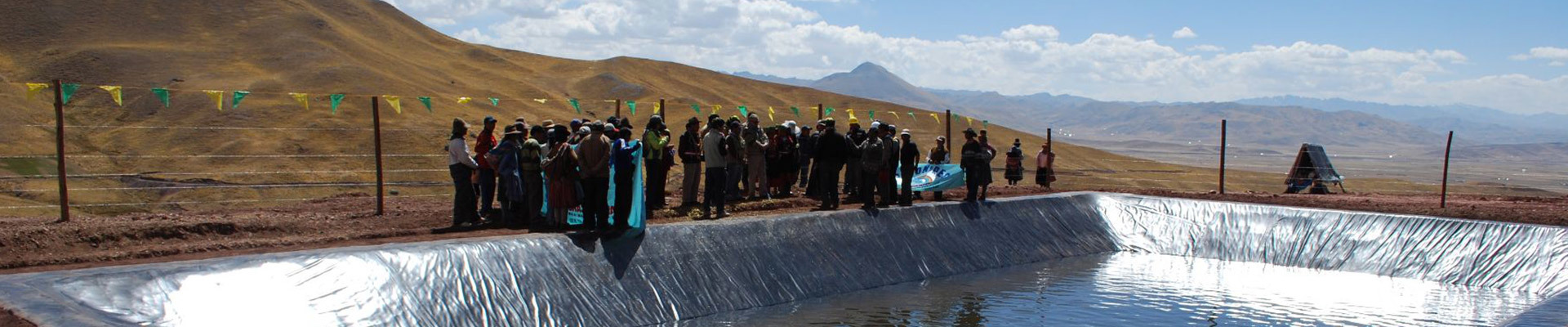
- Potable water reservoirs, irrigation ponds, canals, rainwater harvesting ponds and fire pits. Artificial reservoirs, dams and canals, landscaping. the hygienic properties of HDPE geomembranes and LLDPE geomembranes do not harm the human body and the environment. The impermeable mesh of this structure, made of HDPE geomembranes with a thickness of 2 mm, can be used without a protective layer. When laying a protective layer on slopes, it is possible to use a combination of screen designs, e.g. gravel, concrete or sand. the ease of installation, reliability and durability of HDPE geomembranes and LLDPE geomembranes, as well as the possibility of further arrangements (filling with sand and completing the slopes with concrete), make this material indispensable in these areas of construction);
- Corrosion and waterproofing of concrete structures. Construction and repair of viaducts, concrete water tanks, tunnels and large-diameter sewer piping systems. HDPE geomembranes and LLDPE geomembranes are laid over poured concrete to waterproof the structure.
- Waterproofing of foundation installations, building footings, flat roofs, underground structures and roads. Low moisture absorption, low specific gravity, low cost, ease of installation, and low labor intensity make HDPE geomembranes and LLDPE geomembranes a suitable alternative to roll-conducting materials for roofing and building construction.
While HDPE has superior puncture resistance, LLDPE is more flexible and can be easily stretched over obstacles. lLDPE has greater flexibility and can be prefabricated for field installation, while HDPE must be completely welded in the field. Therefore, whether you use HDPE or LLDPE geomembranes depends entirely on your project. Contact me; we will provide you with expert guidance for your project! We are online 24 hours a day and you can also get free samples of HDPE and LLDPE geomembranes!
PROJECT CASES

Apr 25,2024
Apr 25,2024
Apr 25,2024
Apr 25,2024
Apr 25,2024
Apr 25,2024
Apr 25,2024
Apr 25,2024

Get a quote or fast support
Experienced teams of project experts will provide you with competitive quotes, best service and free samples.
Contact us now
CONTACT US
Tel : +86-158 5345 5188
WhatsApp : +86-158 5345 5188
Wechat : +86-158 5345 5188
Email : Selina@dzhxchina.com
Factory Address: South head of Xingguo Street, Lingcheng District Economic Development Zone, Dezhou City, Shandong, China