Welcome to Dezhou Huaxiang new material technology Co., Ltd. official website

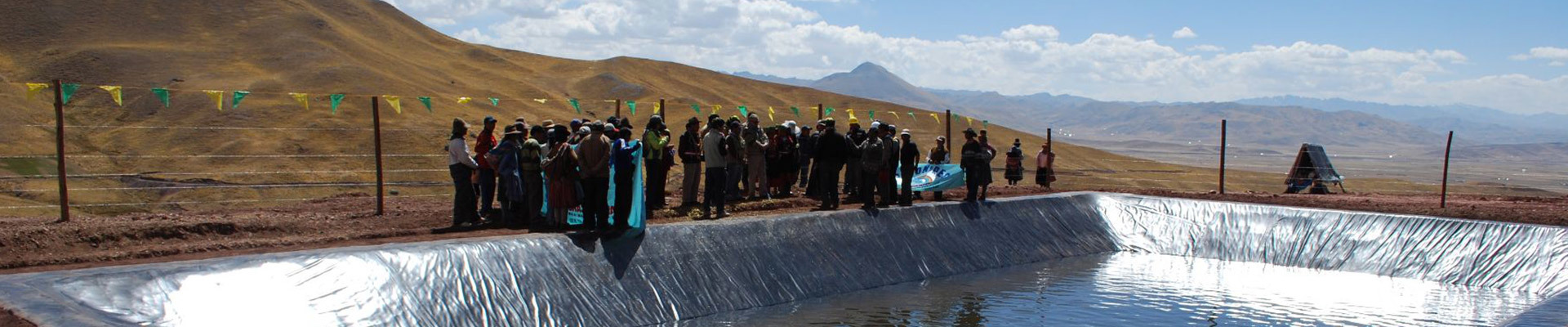
Construction of geomembrane
Release time:
2024-08-27
Geomembrane is an anti-seepage material widely used in civil engineering and environmental protection projects.
Geomembrane is an anti-seepage material widely used in civil engineering and environmental protection projects. It is usually used in anti-seepage projects such as landfills, reservoirs, and tunnels. There are many methods for the construction of geomembranes, but generally include the following main steps:
1. Construction preparation
Material preparation: Select geomembranes that meet the requirements of the engineering design and prepare necessary accessories, such as joint materials, anchoring materials, etc.
Tool preparation: Including film cutting knives, welding equipment (such as hot wedge welders, hot air welders), testing instruments (such as barometers, vacuum test devices), etc.
Site preparation: Clean and level the construction site to ensure that there are no sharp objects or uneven places to avoid damage to the geomembrane.
2. Laying geomembrane
Laying method: Lay the geomembrane according to the laying direction and sequence of the engineering design. When laying, avoid pulling it too tight to prevent deformation after thermal expansion and contraction.
Overlap treatment: The overlapping part of the geomembrane usually needs to leave a certain width (generally 10~15 cm) for subsequent welding or bonding.
Fixing treatment: On slopes or complex terrain, geomembranes need to be fixed. Common methods include anchor groove fixation, sandbag weighting, etc.
3. Seam welding
Welding preparation: Select appropriate welding equipment and welding parameters, such as temperature and speed, according to the type of membrane material. Before welding, the overlap parts need to be cleaned to ensure that there are no dust, oil and other factors that affect the welding quality.
Welding operation: Use hot wedge welders or hot air welders for welding. The welding speed should be kept uniform to avoid being too fast or too slow. After welding is completed, the weld quality needs to be checked immediately.
Weld detection: Usually the vacuum method, air pressure method or electric spark method is used to detect the weld to ensure that the sealing and strength of the weld meet the requirements.
4. Quality inspection
Appearance inspection: Check whether the geomembrane has problems such as damage, wrinkles or uneven welds.
Anti-seepage detection: The anti-seepage effect is tested by water injection or air compression to ensure that there is no leakage.
5. Backfill protection
Backfill material selection: When backfilling the protective layer above the geomembrane, fine-grained materials should be selected to avoid using materials containing sharp particles.
Backfill operation: When backfilling, attention should be paid to even laying to avoid concentrated loads that may damage the geomembrane.
 |
 |
|
PROJECT CASES

Apr 25,2024
Apr 25,2024
Apr 25,2024
Apr 25,2024
Apr 25,2024
Apr 25,2024
Apr 25,2024
Apr 25,2024

Get a quote or fast support
Experienced teams of project experts will provide you with competitive quotes, best service and free samples.
Contact us now
CONTACT US
Tel : +86-158 5345 5188
WhatsApp : +86-158 5345 5188
Wechat : +86-158 5345 5188
Email : Selina@dzhxchina.com
Factory Address: South head of Xingguo Street, Lingcheng District Economic Development Zone, Dezhou City, Shandong, China