Welcome to Dezhou Huaxiang new material technology Co., Ltd. official website

Geocells are used in what kind of projects
Release time:
2024-08-28
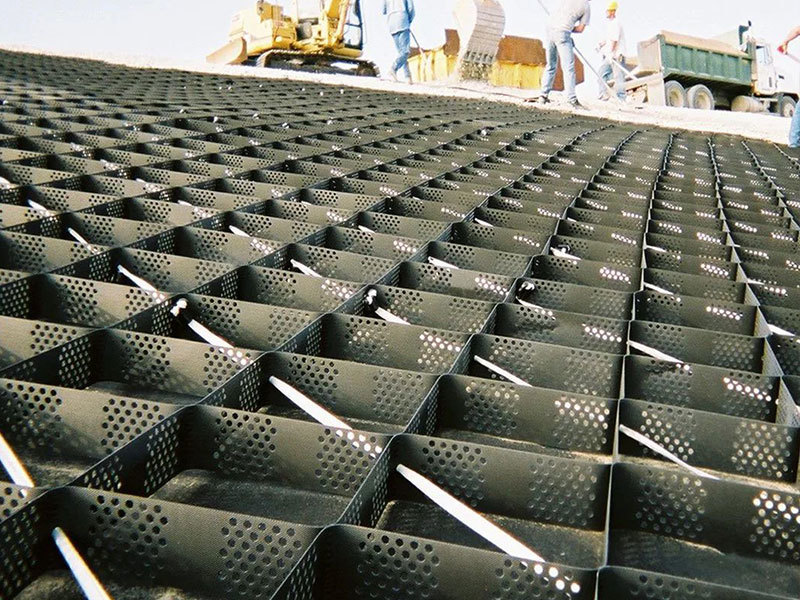
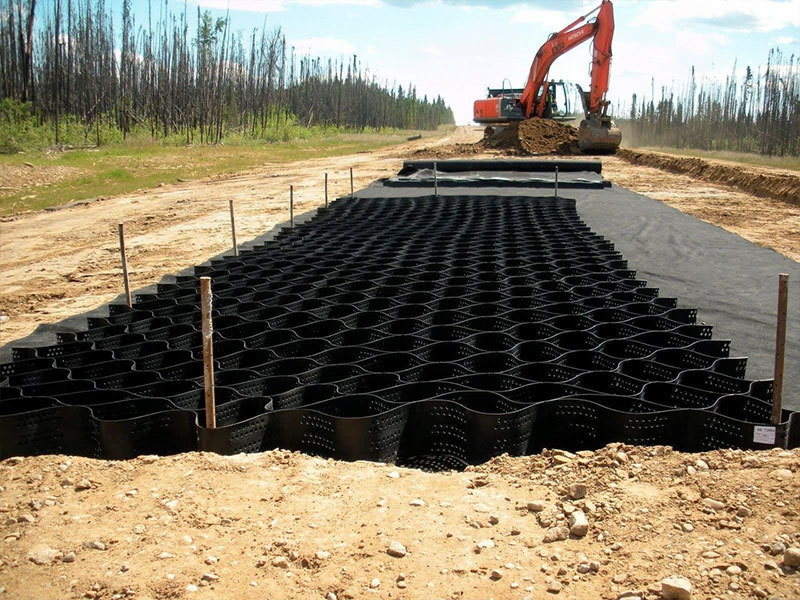
This is reflected in the geocell can be stretched, can be contracted during transportation, can be tensioned into a mesh during construction, filling soil, gravel, concrete and other loose materials, forming a structure with strong lateral restraint and high stiffness. At the same time, geocells are light, wear-resistant, chemically stable, resistant to light and oxygen aging, acid and alkali, and suitable for different soils, deserts and other soil conditions. In addition geocells have high lateral limit, anti-skid, anti-deformation enhance the bearing capacity of the roadbed and disperse the load. In addition geocell flexibility, can change the geocell height, welding distance and other geometric dimensions, scalable, small transportation volume, easy to connect, fast construction, geocell price is not expensive, can meet the needs of the project. Ecological protection is a new mode of highway construction in China, this concept of combining environmental protection and sustainable development is needed and has far-reaching significance, the application of geocell is a good start, it is a form of ecological protection, as a good material for stabilizing the roadbed and greening the slopes, solving the two major problems of slope protection and greening the slopes, which are both inexpensive and efficient, with good reproducibility. And environmentally sustainable.
1. Half-filling and half-excavation roadbed treatment.
When constructing embankment on the natural slope greater than 1:5, the embankment base should be excavated steps, and the width of the steps should not be less than 1 M. When excavating steps, the width of the steps of high grade highway is generally 2 M. In the horizontal plane of each step, geocells are laid, and the use of geocells can better solve the problem of non-uniform settlement by its own elevation reinforcing effect.
2. Sandy roadbed
The roadbed in sandy area should adopt low embankment, and the filling height is generally not less than 0.3 M. Since the construction of roadbed in sandy area has the specialized requirements of low roadbed and heavy load, the use of geocell can limit the loose fill. Ensure that the roadbed has high stiffness and strength within a limited height to withstand the load stress of large vehicles.
3. Reinforcement of fill soil roadbed
The use of geocells can better achieve the purpose of the back of the platform reinforcement, geocells and filler can produce enough friction between the roadbed and the structure to reduce the uneven settlement, and ultimately alleviate the “back of the platform jumping” disease on the bridge deck caused by the early impact of the damage. 4.
4. perennial frozen soil area roadbed
In the perennial permafrost area construction of filling roadbed, should reach the minimum filling height, to prevent the phenomenon of turning slurry or frozen layer upper limit reduced, resulting in excessive settlement of the roadbed. Geocell's unique effect of facade reinforcement and effective implementation of constraints can maximize the minimum filling height in some special road sections, and make the filler have high-quality strength and stiffness.
5、Wet subsidence of loess roadbed treatment
When the highway, primary highway through the compressibility of the wet subsidence of the roadbed, or high embankment foundation allow bearing capacity is lower than the vehicle synergistic load and embankment weight pressure, the embankment will also be adjusted according to the requirements of the bearing capacity, at this time, the superiority of the geocells will be embodied.
6. Salted soil, expanded soil
With saline soil, swelling soil construction of highways, highways, shoulders, slopes using reinforcing measures, grating facade reinforcing effect is the most excellent of all reinforcing materials, and excellent corrosion resistance, to meet the saline soil, swelling soil construction of high-grade highway requirements.
 |
 |
During the rainy season, information about disasters such as mudslides and floods is often seen in the news. The frequent occurrence of natural disasters reminds mankind that destroying the environment can only end up with its own consequences! Vegetation destruction can not be repaired in a short period of time, how to cope with the road construction? Geocells came into being and became an indispensable part of roadbed stabilization and greening!
Addressing erosion protection, lining stability and water flow control. The hydraulic properties of traditional materials such as aggregates, berms and plants are improved due to the confines of the geocell cellular structure.
Flexible and durable armored channel liners formed from concrete fill are less costly than hinged modular systems.
The design takes into account site-specific conditions such as local environmental protection, ecological and aesthetic requirements, minimum expected flows and associated hydraulic stresses.
This is reflected in the geocell can be stretched, can be contracted during transportation, can be tensioned into a mesh during construction, filling soil, gravel, concrete and other loose materials, forming a structure with strong lateral restraint and high stiffness. At the same time, geocells are light, wear-resistant, chemically stable, resistant to light and oxygen aging, acid and alkali, and suitable for different soils, deserts and other soil conditions. In addition geocells have high lateral limit, anti-skid, anti-deformation enhance the bearing capacity of the roadbed and disperse the load. In addition geocell flexibility, can change the geocell height, welding distance and other geometric dimensions, scalable, small transportation volume, easy to connect, fast construction, geocell price is not expensive, can meet the needs of the project.
Ecological protection is a new mode of highway construction in China, this concept of combining environmental protection and sustainable development is needed and has far-reaching significance, the application of geocell is a good start, it is a form of ecological protection, as a good material for stabilizing the roadbed and greening the slopes, solving the two major problems of slope protection and greening the slopes, which are both inexpensive and efficient, with good reproducibility. And environmentally sustainable.
PROJECT CASES

Apr 25,2024
Apr 25,2024
Apr 25,2024
Apr 25,2024
Apr 25,2024
Apr 25,2024
Apr 25,2024
Apr 25,2024

Get a quote or fast support
Experienced teams of project experts will provide you with competitive quotes, best service and free samples.
Contact us now
CONTACT US
Tel : +86-158 5345 5188
WhatsApp : +86-158 5345 5188
Wechat : +86-158 5345 5188
Email : Selina@dzhxchina.com
Factory Address: South head of Xingguo Street, Lingcheng District Economic Development Zone, Dezhou City, Shandong, China