Welcome to Dezhou Huaxiang new material technology Co., Ltd. official website

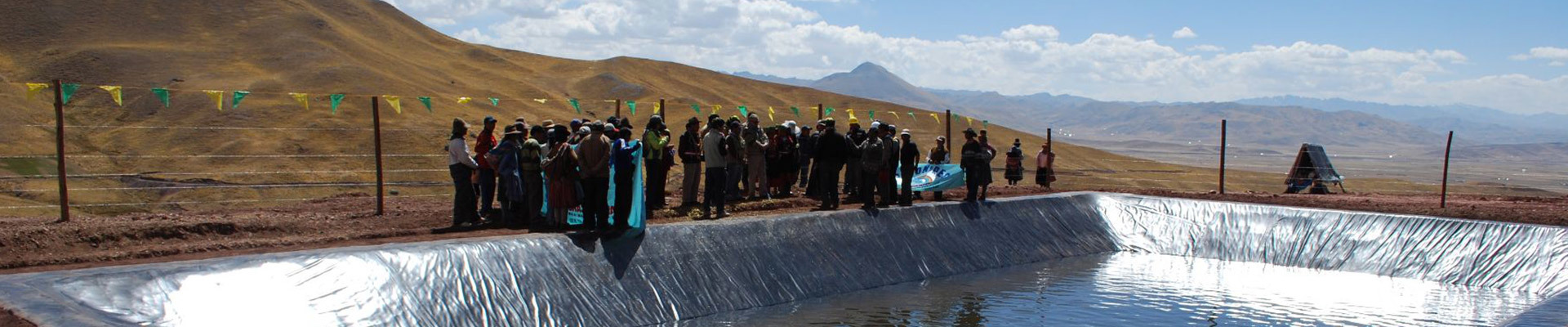
Geomembrane laying
Release time:
2024-09-05
The laying of geomembrane should be carried out according to the design requirements. First lay the main membrane, then lay the connecting membrane, and finally weld it.
Geomembrane laying
The laying of geomembrane is a complex and delicate process, which needs to be carried out strictly in accordance with the construction specifications to ensure its anti-seepage effect and service life. The following are the detailed steps and precautions for laying geomembrane:
1. Preparation
Organize inspection: Organize relevant technical personnel to conduct a comprehensive inspection of the laying site, check the design documents, and understand the terrain and landforms.
Formulate a plan: According to the actual situation on site, reasonably determine the construction plan, and inspect the machinery, equipment and materials entering the site.
Material preparation: Ensure that the quality of geomembrane materials is qualified and the specifications are correct, and store and use them as required. At the same time, prepare the welding machines, cutting machines, compactors and other machinery and equipment required for construction, and check their operation.
Site cleaning: Clear the debris, stones and other obstacles on the laying site, and repair the terrain and landforms according to the design requirements. Roll and compact the foundation, and level it according to the design requirements. Clean the surface of the foundation to ensure that there is no oil, dust and other debris on the surface.
2. Laying process
Measurement and layout: According to the design requirements, the foundation is laid out and marked, and the laying position is determined. Laying geomembrane:
Laying order: Lay according to the design requirements, first lay the main membrane, then lay the connecting membrane, and finally weld.
Laying method: Move the geomembrane to the construction site, roll it horizontally along the design direction, and pull it open and flatten it. Note that the direction of the membrane should be as parallel to the maximum slope line as possible, lay it from low to high, and leave a margin. Do not pull it too tight to prevent part of the anti-seepage membrane from sinking. For slopes, the laying order should be from top to bottom.
Laying requirements: Ensure that the geomembrane is accurately positioned and flat, and no distortion, wrinkles, etc. should occur. The nodes formed between the membrane blocks during laying should be T-shaped and should not be made into a cross shape. The overlap width of the joint is generally not less than 10cm, and the weld arrangement direction is usually parallel to the large slope.
Welding and joint treatment:
Welding form: Double weld lap welding is recommended, and there should be no oil, dust and other debris at the joint.
Welding control: Adjust the welding equipment to the working state, control the welding temperature and time, and avoid problems such as burning and deformation. After welding is completed, the welding quality is tested to ensure that the welding is firm, without leaking welding, desoldering and other problems.
Joint treatment: Use professional tools and methods to treat the joints to ensure that the joints are well sealed without cracks or openings. For geomembranes with rough rolling, wrinkles, and uneven edges, repair treatment is required.
3. Backfill and protection
Backfill construction: After the welding inspection is completed, backfill construction is carried out. Pay attention to protecting the geomembrane during backfilling to avoid damage. At the same time, ensure that the backfill meets the design requirements and avoid sharp objects such as stones and branches. When backfilling, it is necessary to compact in layers and ensure that the thickness of each layer meets the requirements.
Protection treatment: After the backfill is completed, the surface of the geomembrane is protected to prevent it from being damaged by external forces. Protective materials with good environmental performance, such as geotextiles, fine soil, etc., can be used for covering and protection.
4. Precautions
Temperature control: When constructing under low temperature conditions, measures should be taken to increase the temperature of the membrane material, such as using a hot air blower to heat it, to ensure its bonding performance.
Influence of wind: When constructing in areas with strong winds, fixed measures should be taken, such as using fixed leveling equipment, sandbags and other heavy objects to compact the geomembrane to prevent it from being blown or torn by the wind.
Quality inspection: During the construction process and after backfilling, a comprehensive quality inspection and acceptance should be carried out to ensure that the laying quality of the geomembrane meets the requirements. Any problems and defects found should be handled and improved in a timely manner.
 |
 |
 |
If you have an order for geomembrane products, please feel free to contact us, our professional sales consultants will provide you with professional advice, the best prices and beneficial services.
PROJECT CASES

Apr 25,2024
Apr 25,2024
Apr 25,2024
Apr 25,2024
Apr 25,2024
Apr 25,2024
Apr 25,2024
Apr 25,2024

Get a quote or fast support
Experienced teams of project experts will provide you with competitive quotes, best service and free samples.
Contact us now
CONTACT US
Tel : +86-158 5345 5188
WhatsApp : +86-158 5345 5188
Wechat : +86-158 5345 5188
Email : Selina@dzhxchina.com
Factory Address: South head of Xingguo Street, Lingcheng District Economic Development Zone, Dezhou City, Shandong, China