Welcome to Dezhou Huaxiang new material technology Co., Ltd. official website

Classification and application of geotextiles
Release time:
2024-09-06
Geotextile is a material widely used in civil engineering and environmental engineering
Geotextile is a material widely used in civil engineering and environmental engineering. Its main functions are soil separation, filtration, drainage and reinforcement. It is usually made of synthetic fibers (such as polyester or polypropylene) and has several different types according to different needs and applications. The following are the main types of geotextiles and their applications:
1. Types of geotextiles
Nonwoven Geotextiles
Features: Made of fibers through processes such as needle punching, hot pressing or chemical bonding, with loose structure and high porosity.
Application: Mainly used for filtration, separation and drainage. Commonly used in projects such as roads, railways, dams, etc. to prevent the loss of soil and fine particles and ensure the stability of the soil.
Woven Geotextiles
Features: A mesh structure is formed by the interweaving of warp knitting and weft knitting, which usually has high strength and tensile resistance.
Application: Mainly used for soil reinforcement, reinforcement of load-bearing structures and occasions with high tensile resistance requirements, such as road base, soil improvement, etc.
Composite Geotextiles
Features: Non-woven fabrics are combined with woven fabrics or other functional materials (such as geomembranes) to combine the advantages of two or more materials.
Applications: Suitable for projects that require filtration, drainage and reinforcement functions at the same time, such as bottom seepage prevention and reinforcement of landfills, dam reinforcement, etc.
Geosynthetic Membranes
Features: Thin films with waterproof and anti-permeability functions, usually made of polyvinyl chloride (PVC) or polyethylene (HDPE) materials.
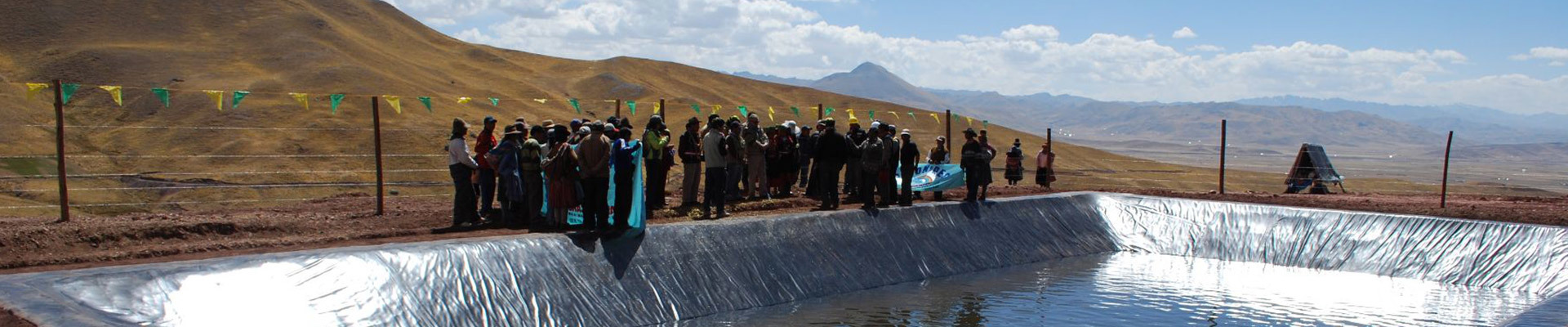
Applications: Mainly used for anti-seepage, isolation and waterproofing, such as the bottom seepage prevention layer of landfills, reservoir linings, etc.
2. Application areas
Road engineering
Use: Improve soil bearing capacity, prevent soil settlement, and reduce roadbed deformation.
Applications: Road base reinforcement, roadbed anti-sedimentation, road surface drainage system.
Railway engineering
Use: Improve track stability, reduce settlement, and prevent soil loss.
Applications: Railway roadbed reinforcement and drainage system.
Water conservancy project
Use: prevent soil erosion, protect dams, and enhance the stability of hydraulic structures.
Application: dam reinforcement, anti-seepage layer, river slope protection.
Environmental protection
Use: prevent pollutant leakage and protect groundwater resources.
Application: anti-seepage layer of landfill, bottom and side wall anti-seepage of sewage treatment plant.
Construction project
Use: enhance the stability of building foundation and reduce settlement.
Application: foundation reinforcement, soil isolation, basement moisture prevention.
 |
Summary
The selection and application of geotextiles should be determined according to the needs of specific projects, soil conditions and use environment. Understanding the characteristics of different types of geotextiles and their applicable scenarios will help to make reasonable choices in engineering design to improve engineering quality and efficiency.
PROJECT CASES

Apr 25,2024
Apr 25,2024
Apr 25,2024
Apr 25,2024
Apr 25,2024
Apr 25,2024
Apr 25,2024
Apr 25,2024

Get a quote or fast support
Experienced teams of project experts will provide you with competitive quotes, best service and free samples.
Contact us now
CONTACT US
Tel : +86-158 5345 5188
WhatsApp : +86-158 5345 5188
Wechat : +86-158 5345 5188
Email : Selina@dzhxchina.com
Factory Address: South head of Xingguo Street, Lingcheng District Economic Development Zone, Dezhou City, Shandong, China