Welcome to Dezhou Huaxiang new material technology Co., Ltd. official website

What is geotextile construction?
Release time:
2024-09-06
Geotextile construction is a carefully planned and executed process involving site preparation, geotextile laying, edge fixing and compaction.
What is geotextile construction?
1. Construction preparation
Survey and planning: Before construction, conduct a detailed survey of the construction area to understand the impact of geological conditions, hydrological conditions, climatic conditions and other factors on construction. At the same time, formulate detailed construction plans and safety measures to ensure the smooth progress of the construction process.
Material preparation: Prepare the required construction materials and equipment, such as geotextiles, gravel, excavators, rollers, etc. Ensure that the material quality is qualified and the equipment is intact and available.
2. Construction site arrangement
Clean up the site: Remove obstacles such as weeds, tree roots, stones, etc. in the construction area to ensure the flatness of the construction site. Pay special attention to removing potholes and excess weeds to facilitate the laying of geotextiles.
Drainage treatment: Carry out necessary drainage treatment on the construction site to prevent rainwater from having an adverse effect on the construction. Ensure that the surface of the site is dry and there is no water accumulation.
3. Geotextile laying
Inspection and cutting: Before laying, check whether the geotextile is damaged or defective. If so, it should be repaired or replaced in time. According to actual needs, measure the area and cut out suitable plates.
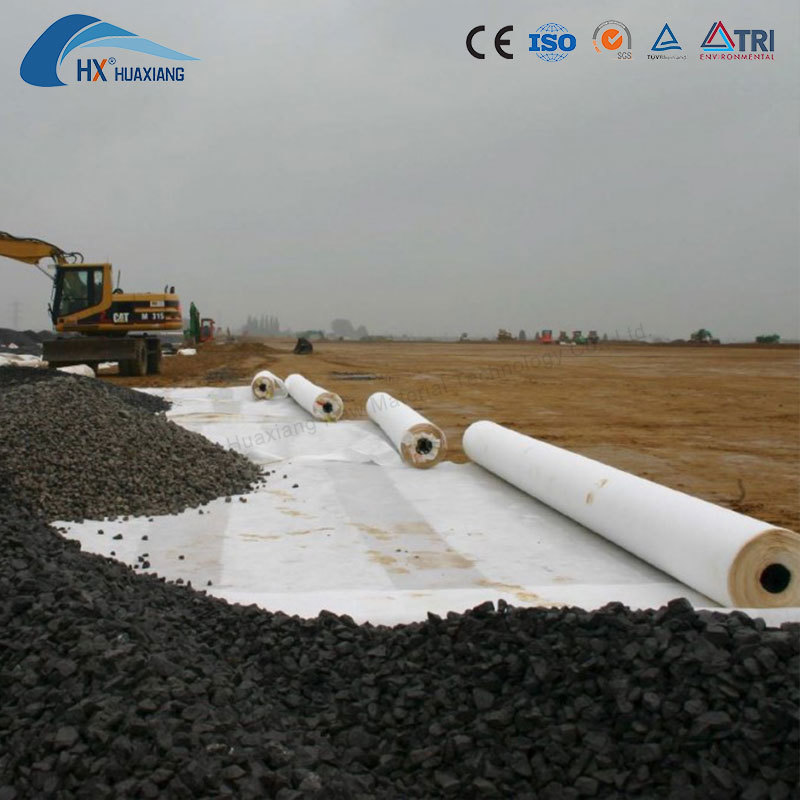
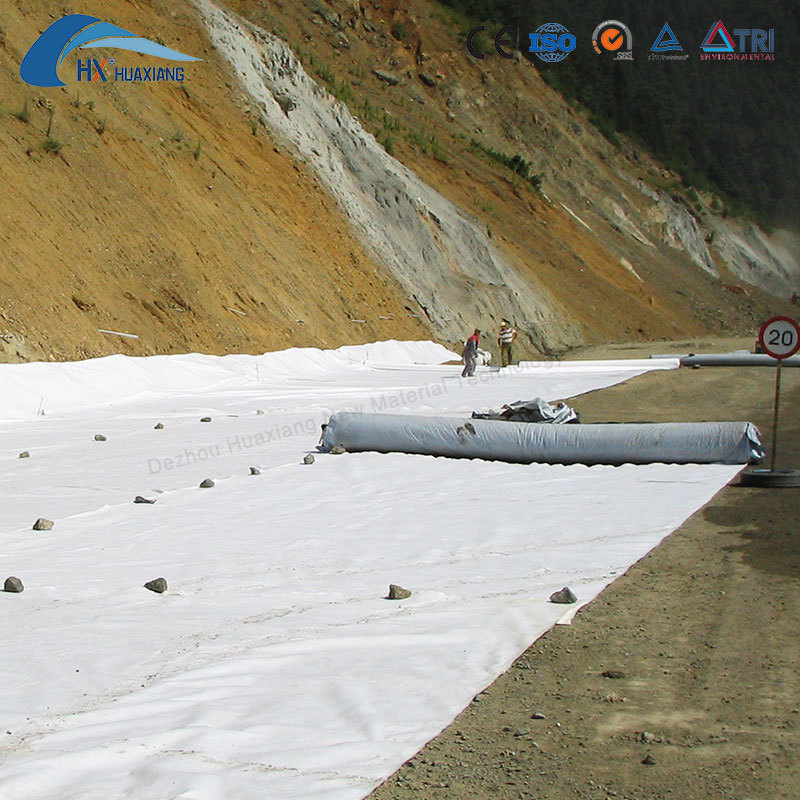
Laying operation: Unfold the geotextile and lay it flat on the ground, keeping it flat and tight to avoid wrinkles or gaps. During the laying process, control the tension to prevent the geotextile from being damaged due to excessive tension. At the same time, ensure that the transmission direction of the geotextile is consistent and cannot be flipped or cut.
Laying method: There are three main laying methods for geotextiles: overlap, suturing and welding. The overlap width is generally about 25 cm, the suturing width is about 15 cm, and the welding width is about 20 cm. The specific method to be selected should be determined according to the actual situation and design requirements.
4. Fixation and compaction
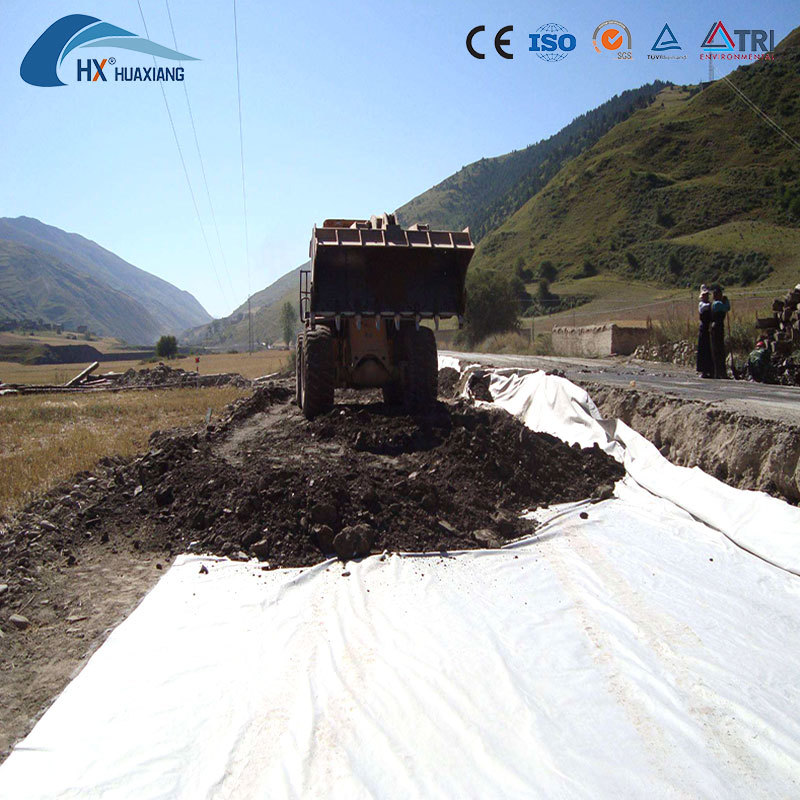
Fixation treatment: After laying, use gravel or other suitable materials to compact the edges and joints of the geotextile to prevent it from shifting or sliding during use. Pier nails, steel wire, clamps and double-sided tape can also be used for anchoring and fixing.
Compaction treatment: Use a roller or other compaction equipment to compact the geotextile and the filler on it to improve its stability and durability. During the compaction process, the compaction strength and speed should be controlled to avoid damage to the geotextile.
 |
 |
 |
5. Inspection and Acceptance
Quality inspection: After the construction is completed, a detailed inspection is carried out, including the laying quality, fixing effect, and whether there are damage, defects or safety hazards of the geotextile. If there are any problems, they should be rectified and handled in time.
Acceptance report: Prepare detailed construction records and acceptance reports to summarize and evaluate the construction process. The acceptance report should include construction time, location, personnel, materials, equipment, construction methods, quality inspection conditions, etc.
6. Post-maintenance and management
Regular inspection: Regularly inspect and patrol the construction area to promptly discover and deal with possible problems.
Protection management: Strengthen the protection and management of the construction area to prevent human damage or the influence of natural factors.
Use monitoring: Monitor and evaluate the use of geotextiles so that problems can be discovered in time and appropriate treatment measures can be taken.
If you have an order for geotextile products, please feel free to contact us, our professional sales consultants will provide you with professional advice, the best prices and beneficial services.
PROJECT CASES

Apr 25,2024
Apr 25,2024
Apr 25,2024
Apr 25,2024
Apr 25,2024
Apr 25,2024
Apr 25,2024
Apr 25,2024

Get a quote or fast support
Experienced teams of project experts will provide you with competitive quotes, best service and free samples.
Contact us now
CONTACT US
Tel : +86-158 5345 5188
WhatsApp : +86-158 5345 5188
Wechat : +86-158 5345 5188
Email : Selina@dzhxchina.com
Factory Address: South head of Xingguo Street, Lingcheng District Economic Development Zone, Dezhou City, Shandong, China