Welcome to Dezhou Huaxiang new material technology Co., Ltd. official website

Advantages and applications of composite geomembrane
Release time:
2024-09-13
Composite geomembrane is a material widely used in geotechnical engineering. It is composed of a geomembrane and a geotextile (usually a geotextile).
Composite geomembrane is a material widely used in geotechnical engineering. It is composed of a geomembrane and a geotextile (usually a geotextile). It combines the waterproofing properties of geomembranes and the soil reinforcement capabilities of geotextiles, with multiple advantages and a wide range of applications. The following are the main advantages and applications of composite geomembranes:
Advantages
Excellent waterproof performance: The main component of composite geomembrane is geomembrane, which has high waterproof performance and can effectively prevent liquid leakage.
Enhanced puncture resistance: Due to the reinforcement effect of the geotextile, the puncture resistance of the composite geomembrane is significantly improved, thereby reducing the risk of membrane rupture.
Good soil support ability: Geotextile provides soil support, helps prevent soil displacement and erosion, and enhances the stability of the structure.
Strong durability: Composite geomembrane materials have excellent chemical resistance and weather resistance, and can be used for a long time under extreme environmental conditions.
Easy construction: Composite geomembrane can significantly reduce construction time and labor intensity because it can be laid in a shorter time and usually does not require complex joint processing.
Application
Landfill: Used on the bottom and side walls of landfills to prevent leachate from seeping into groundwater and protect the environment.
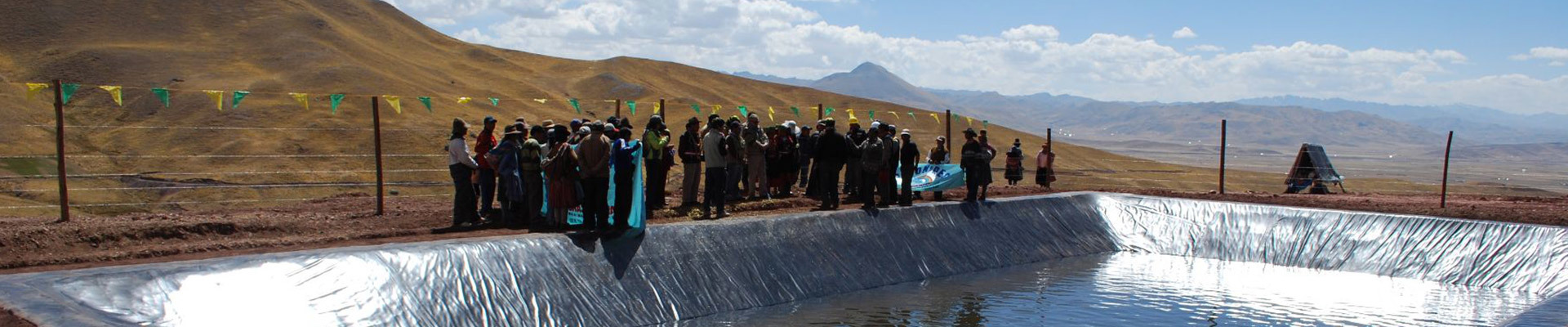
Reservoirs and ponds: Lay composite geomembranes on the bottom and side walls of reservoirs and ponds to prevent water leakage and improve the water storage capacity of the water body.
Mine waste storage: Composite geomembranes are laid in mining waste storage sites to prevent harmful substances from penetrating and polluting groundwater.
Anti-seepage projects: In various anti-seepage projects, such as anti-seepage trenches, isolation walls, etc., the use of composite geomembranes can effectively prevent the leakage of water or pollutants.
Road and railway engineering: In road and railway construction, composite geomembrane can be used as a waterproof layer or soil reinforcement layer to improve the stability and durability of the project.
Water treatment facilities: In water treatment facilities, such as sedimentation tanks and filter tanks in sewage treatment plants, composite geomembranes can effectively prevent leakage and infiltration problems.
 |
Summarize
Composite geomembrane has become an important material in the field of geotechnical engineering due to its superior waterproof performance, enhanced puncture resistance, good support ability and durability, and is widely used in environmental protection, waterproofing, reinforcement and other scenarios. n
PROJECT CASES

Apr 25,2024
Apr 25,2024
Apr 25,2024
Apr 25,2024
Apr 25,2024
Apr 25,2024
Apr 25,2024
Apr 25,2024

Get a quote or fast support
Experienced teams of project experts will provide you with competitive quotes, best service and free samples.
Contact us now
CONTACT US
Tel : +86-158 5345 5188
WhatsApp : +86-158 5345 5188
Wechat : +86-158 5345 5188
Email : Selina@dzhxchina.com
Factory Address: South head of Xingguo Street, Lingcheng District Economic Development Zone, Dezhou City, Shandong, China