Welcome to Dezhou Huaxiang new material technology Co., Ltd. official website

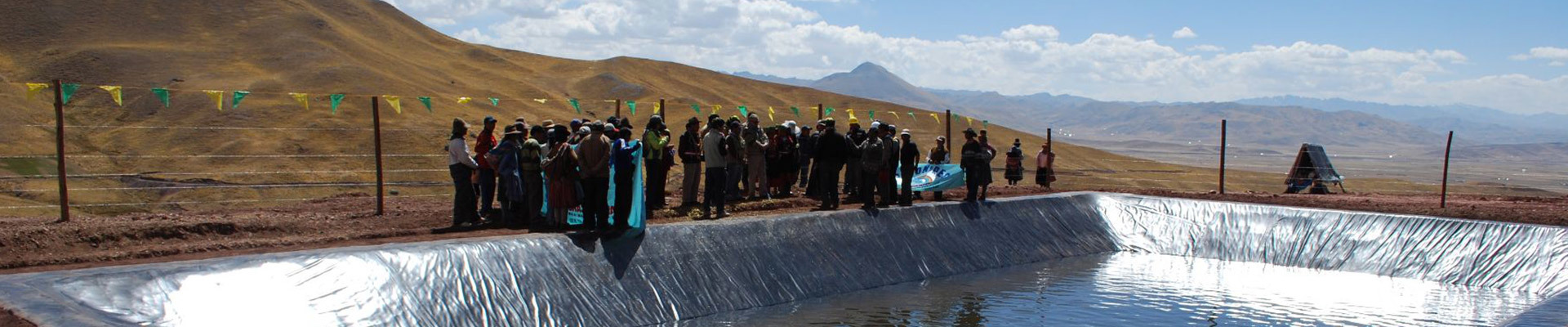
Composite geomembrane construction
Release time:
2024-09-23
During the entire construction process, it is necessary to avoid friction or impact of hard objects on the geomembrane, and try to avoid wrinkles and joints. When laying, it should be parallel to the direction of the driving route to avoid damage caused by vehicle rolling. After welding is completed, the entire composite geomembrane is fully inspected and accepted to ensure the construction quality.
I. Laying steps:
1. Base treatment: Ensure that the base for laying composite geomembrane is flat, the local height difference is not more than 50mm, remove tree roots, grass roots and hard objects to avoid damage to the composite geomembrane.
2. Material inspection: Check whether the composite geomembrane is damaged, ensure that the material is intact and lay it in the main force direction, leaving a certain amount of expansion to adapt to the deformation of the substrate.
3. Laying requirements: When laying, it should be manually tightened to avoid wrinkles, close to the underlying layer, and compacted in time to prevent it from being blown by the wind. Avoid construction during water accumulation or rain, and the bentonite pad laid on the same day must be covered with backfill soil.
4. Reserve surplus: There must be surplus at both ends of the composite geomembrane, not less than 1000mm at each end, and it must be fixed according to the design requirements.
5. Welding preparation: For the laid composite geomembrane, there should be no oil, moisture, dust, etc. at the edge joints. Before welding, adjust the two PE single films at the joints. The overlap width is generally 6-8cm and flat without wrinkles.
II. Welding steps:
1. Overlap width of weld: generally 80-100mm, the natural wrinkles of the plane and vertical surface are 5%-8% respectively, the reserved expansion amount is 3%-5%, and the residual amount of scraps is 2%-5%.
2. Hot melt welding: working temperature 280-300℃, travel speed 2-3m/min, welding form is double track welding.
3. Damage repair: the damaged parts are hot melted with materials of the same cutting specifications or sealed with special geomembrane glue.
4. Non-woven fabric connection: The connection of non-woven fabric at the weld. The geotextiles composited on both sides of the membrane can be welded with a hot air welding gun if the weight is below 150g/m2, and can be sewn with a portable sewing machine if the weight is above 150g/m2.
5. Sealing and water stopping: The sealing and water stopping of the underwater pipe mouth is sealed with GB rubber water stopping strips, and the metal is wrapped and anti-corrosion treated.
 |
 |
 |
PROJECT CASES

Apr 25,2024
Apr 25,2024
Apr 25,2024
Apr 25,2024
Apr 25,2024
Apr 25,2024
Apr 25,2024
Apr 25,2024

Get a quote or fast support
Experienced teams of project experts will provide you with competitive quotes, best service and free samples.
Contact us now
CONTACT US
Tel : +86-158 5345 5188
WhatsApp : +86-158 5345 5188
Wechat : +86-158 5345 5188
Email : Selina@dzhxchina.com
Factory Address: South head of Xingguo Street, Lingcheng District Economic Development Zone, Dezhou City, Shandong, China