Welcome to Dezhou Huaxiang new material technology Co., Ltd. official website

Uses of Geosynthetic Clay Liner
Release time:
2024-09-26
Geosynthetic Clay Liner plays an important role in many fields such as environmental engineering, infrastructure construction, agriculture and water conservancy engineering. It is an indispensable anti-seepage and isolation material in modern engineering.
Uses of Geosynthetic Clay Liner
Geosynthetic Clay Liner (GCL), also known as geosynthetic clay pad, is a composite material that combines geotextile (or membrane) and bentonite particles, with excellent anti-seepage, isolation and protection properties. It has a wide range of uses in many fields, mainly including the following aspects:
1. Landfill:
As an anti-seepage liner at the bottom and side of the landfill, it effectively prevents the pollution of the surrounding soil and groundwater by the leachate of garbage.
Improve the overall stability and safety of the landfill.
2. Underground storage tanks and pipelines:
Used to wrap or isolate underground storage tanks and pipelines to prevent the leakage of stored materials (such as chemicals, oil, etc.) from polluting the soil and groundwater.
3. Groundwater pollution control:
In groundwater pollution remediation projects, it acts as a vertical or horizontal barrier to prevent the migration and diffusion of pollutants in the soil.
4. Artificial wetlands and ecological restoration:
In artificial wetland systems, GCL can be used to construct a bottom anti-seepage layer to keep the water clean and the ecosystem stable.
Used in ecological restoration projects, such as wetland restoration, riverbank protection, etc., to provide a stable foundation and anti-seepage function.
5. Infrastructure construction:
In infrastructure projects such as underground tunnels, subways, and drainage ditches, as a waterproof and isolation layer to protect the project structure and the surrounding environment.
In embankments and flood control projects, improve the anti-seepage performance and stability of the embankment.
6. Agriculture and water conservancy projects:
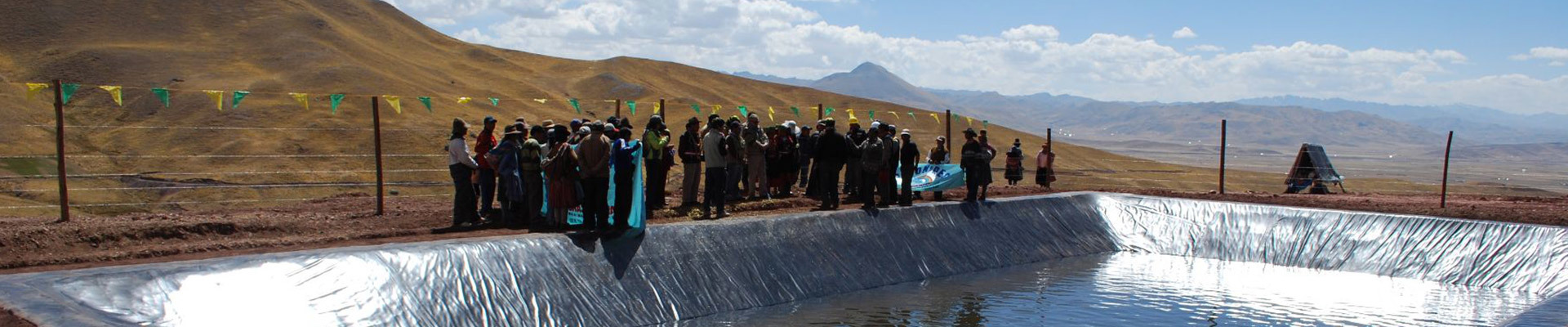
In farmland irrigation systems, as an anti-seepage material for channels and ponds, improve the efficiency of water resource utilization.
In water conservancy projects such as reservoirs and dams, as an anti-seepage and isolation layer to ensure project safety.
7. Nuclear waste and hazardous waste treatment:
When dealing with nuclear waste and highly hazardous waste, GCL's high anti-seepage performance makes it an important isolation and protection material.
The reason why GCL can be widely used in these fields is mainly because it has the following advantages:
High anti-seepage performance: bentonite particles swell in water to form a tight waterproof layer, which effectively prevents liquid penetration.
Good flexibility and adaptability: It can adapt to complex terrain and geological conditions and is easy to construct and install.
Higher tensile strength and durability: Geotextiles enhance the overall strength of GCL, enabling it to withstand certain external loads and deformations.
Environmental protection and sustainability: Bentonite is a natural material that is harmless to the environment, and GCL can be recycled and reused, meeting the requirements of sustainable development.
 |
 |
 |
As a leading global manufacturer of geosynthetics products, our commitment to innovation and quality makes us the first choice for engineers, contractors and project managers around the world. If you have a project under construction, please feel free to contact us. Our professional sales consultants will provide technical solutions online 24 hours a day. At the same time, we can also provide you with free geosynthetics clay liner product samples for testing
PROJECT CASES

Apr 25,2024
Apr 25,2024
Apr 25,2024
Apr 25,2024
Apr 25,2024
Apr 25,2024
Apr 25,2024
Apr 25,2024

Get a quote or fast support
Experienced teams of project experts will provide you with competitive quotes, best service and free samples.
Contact us now
CONTACT US
Tel : +86-158 5345 5188
WhatsApp : +86-158 5345 5188
Wechat : +86-158 5345 5188
Email : Selina@dzhxchina.com
Factory Address: South head of Xingguo Street, Lingcheng District Economic Development Zone, Dezhou City, Shandong, China