Welcome to Dezhou Huaxiang new material technology Co., Ltd. official website

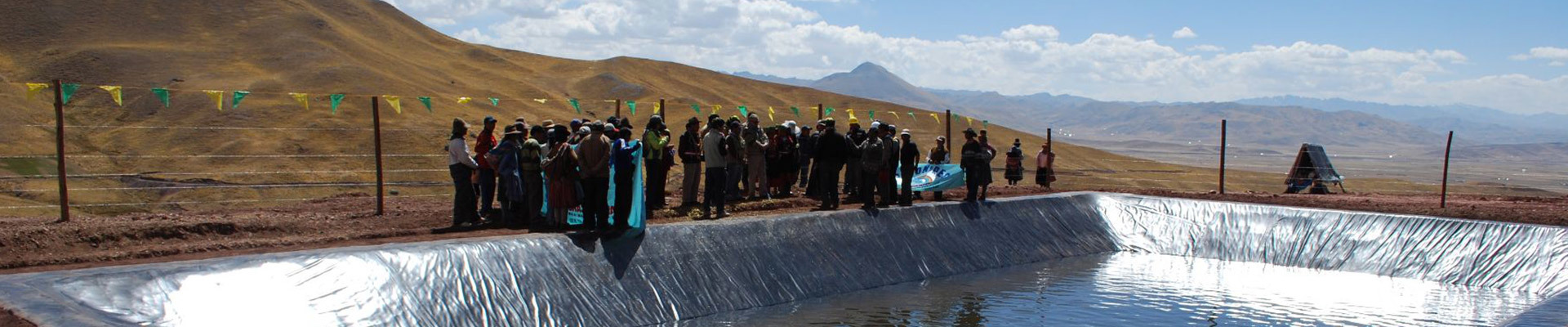
What should be the thickness of the HDPE pond liner?
Release time:
2024-09-26
High-density polyethylene seepage control mat has excellent anti-aging, anti-ultraviolet, tear and puncture resistance, large friction coefficient, small brittleness, small thermal deformation, good chemical stability, wide range of adaptable ambient temperatures, resistance to high and low temperatures, resistance to asphalt, petroleum and tar, acids, alkalis, salts, and other chemical solutions, excellent seepage control, short construction period, low cost, resistance to plant roots, chemical corrosion resistance, and good seepage control effect.
The main purpose of HDPE pond liners is to avoid direct contact with the soil and to avoid water contamination. HDPE pond liners reduce the risk of disease and protect and promote fish growth by preventing waste from accumulating in the soil and by preventing harmful chemicals such as ammonia, hydrogen sulfide, acids, iron and other harmful compounds from entering the pond.
HDPE Pond Liner is a flexible waterproof barrier material produced from high density polyethylene resin and contains no preservatives. The HDPE pond liner itself has a high impermeability coefficient (1 x 10-17 cm/s) and is used in ambient temperatures of 110°C for high temperatures and -70°C for low temperatures. It has strong anti-aging properties and can be used for a long time. It can be operated under various harsh geological and climatic conditions while maintaining its original performance.
How thick is the HDPE pond liner usually selected?
1. Fish pond depth: The thickness of the HDPE pond liner is usually based on the depth of the fish pond. The depth of the fish pond is an important factor as it relates to the ability of the HDPE pond liner to withstand water pressure. Deeper fish ponds may require a thicker geomembrane to ensure waterproofing. Usually, if shallower, choose 0.50mm-0.75mm thick, if deeper, choose 0.75mm-1.5mm thick.
2, the service life of the fish pond: it also depends on the service life of the fish pond, if it is used for 3-5 years, then choose 0.50mm-0.75mm thick high-density polyethylene pond liner, if it is used for 5-10 years, then choose 0.75mm-1.5mm thick high-density polyethylene pond liner. If you expect your fish pond and geomembrane to have a longer life, choosing a thicker geomembrane may be a wise choice.
3. Fish pond use: Different fish pond uses may require different thicknesses of geomembrane. If you are only raising fish, you can choose a thickness of 0.50mm-0.75mm. If you are using it for shrimp and crab farming, you can choose a thickness of 0.75mm-1.5mm, and you will need a thicker geomembrane to cope with the potential risk of damage.
4. Soil conditions: Different types of soil have different effects on the permeability and durability of geomembranes. If the soil is highly permeable or contains sharp objects, a thicker geomembrane may be required.
PROJECT CASES

Apr 25,2024
Apr 25,2024
Apr 25,2024
Apr 25,2024
Apr 25,2024
Apr 25,2024
Apr 25,2024
Apr 25,2024

Get a quote or fast support
Experienced teams of project experts will provide you with competitive quotes, best service and free samples.
Contact us now
CONTACT US
Tel : +86-158 5345 5188
WhatsApp : +86-158 5345 5188
Wechat : +86-158 5345 5188
Email : Selina@dzhxchina.com
Factory Address: South head of Xingguo Street, Lingcheng District Economic Development Zone, Dezhou City, Shandong, China