Welcome to Dezhou Huaxiang new material technology Co., Ltd. official website

The difference between geomembrane blowing and laminating
Release time:
2024-09-29
There are significant differences between geomembrane blown film and geomembrane lamination in terms of material properties, production process, application areas and cost-effectiveness. In practical applications, the appropriate production process and geomembrane type should be selected according to specific needs and scenarios to ensure the maximum quality of the project and economic benefits.
The difference between geomembrane blowing and laminating
As two common production processes in the field of geosynthetics, geomembrane blowing and laminating have their own unique characteristics and applicable scenarios. They have significant differences in material properties, production processes, application fields, and cost-effectiveness. The following is a detailed comparative analysis:
1. Differences in material properties
Blowing film process: The prepared geomembrane usually has high tensile strength and elongation, so it has good flexibility and deformation resistance. When subjected to external forces, this geomembrane can effectively absorb and disperse stress, reducing the damage of soil or water to the structure.
Laminating film process: pay more attention to the barrier properties and weather resistance of the material. The laminating geomembrane can effectively block the penetration of moisture and gas through special coating treatment, and has good UV resistance, aging resistance and other characteristics, suitable for long-term outdoor use.
2. Comparison of production processes
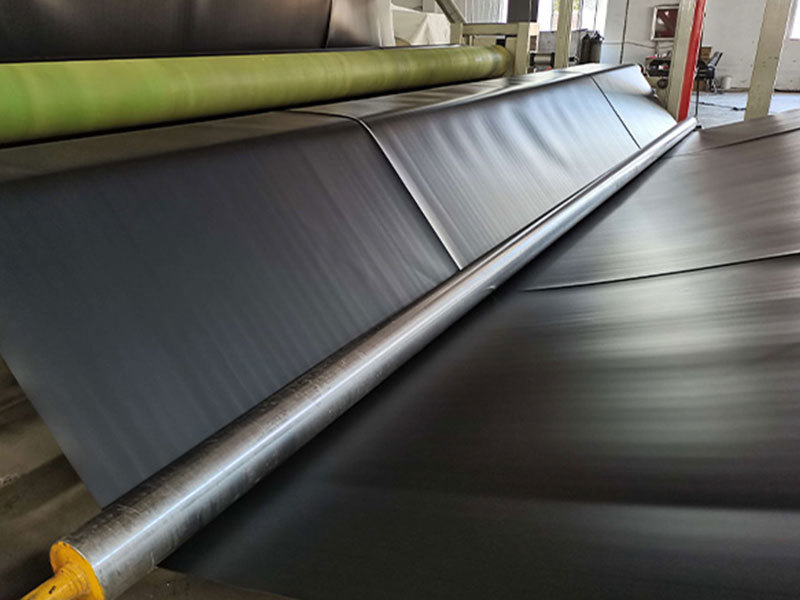
Blowing film process: It is to form a film of a certain thickness by blowing the molten plastic raw material. This process is simple to operate, has high production efficiency, and is suitable for large-scale production. The geomembrane produced by the blowing film process has a rough surface, but the film thickness is uniform, the strength index is good, and the film blowing machine is commonly used for production above the urban construction standard.
Laminating process: the molten plastic raw material is coated on the surface of the substrate, and a thin film is formed by cooling and solidification. The laminating process has high requirements for equipment precision and operation technology, but it can produce geomembranes with special functions. The geomembrane produced by the laminating process has a smooth surface and high brightness, but the lateral thickness variation is large and there is uneven thickness.
3. Comparison of application fields
Blown film geomembrane: Due to its good flexibility and deformation resistance, it is widely used in water conservancy projects, highway projects, environmental projects and other fields, such as anti-seepage channels, slope protection, tunnel lining, etc.
Laminating geomembrane: It is more used in packaging, agricultural covering, building waterproofing and other fields, because its barrier properties and weather resistance can meet the special requirements of these fields for materials.
4. Cost-benefit analysis
Blown film process: Due to its simple operation and high production efficiency, it is relatively low in cost. This makes blown film geomembrane highly competitive in the market, especially suitable for large-scale engineering projects that are sensitive to cost.
Laminating process: Although the cost is relatively high, the geomembrane produced by it has unique functions and performances and can meet the needs of some special application scenarios. Therefore, it still has irreplaceable advantages in certain fields.
 |
 |
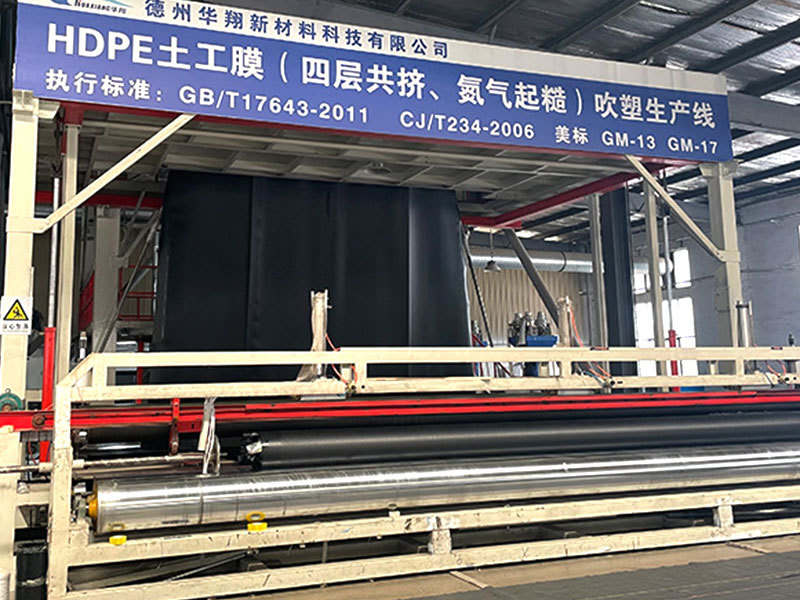 |
As a leading geomembrane manufacturer, supplier and wholesaler, our quality meets ASTM GRI-GM13 standards. In addition, we have obtained CE, ISO9001, ISO14001 and ISO45001 certificates. Our customer projects include aquaculture (fish ponds, shrimp ponds), water conservancy (canals, dams), environmental protection (landfills, sewage treatment), mining (heap leaching ponds, tailings), agriculture (reservoirs) and many other projects with 100% customer satisfaction.
PROJECT CASES

Apr 25,2024
Apr 25,2024
Apr 25,2024
Apr 25,2024
Apr 25,2024
Apr 25,2024
Apr 25,2024
Apr 25,2024

Get a quote or fast support
Experienced teams of project experts will provide you with competitive quotes, best service and free samples.
Contact us now
CONTACT US
Tel : +86-158 5345 5188
WhatsApp : +86-158 5345 5188
Wechat : +86-158 5345 5188
Email : Selina@dzhxchina.com
Factory Address: South head of Xingguo Street, Lingcheng District Economic Development Zone, Dezhou City, Shandong, China