Welcome to Dezhou Huaxiang new material technology Co., Ltd. official website

The difference between filament geotextile and short fiber geotextile
Release time:
2024-07-09
Filament geotextiles and short-fiber geotextiles are two common geotextile types that are mainly used in civil engineering and construction projects. Their differences are mainly reflected in the production process, performance characteristics and application fields.
Filament geotextiles and short-fiber geotextiles are two common geotextile types that are mainly used in civil engineering and construction projects. Their differences are mainly reflected in the production process, performance characteristics and application fields:
Production Process
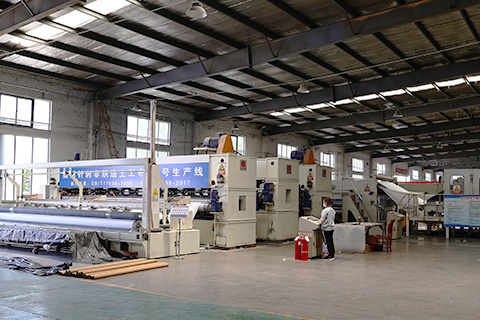
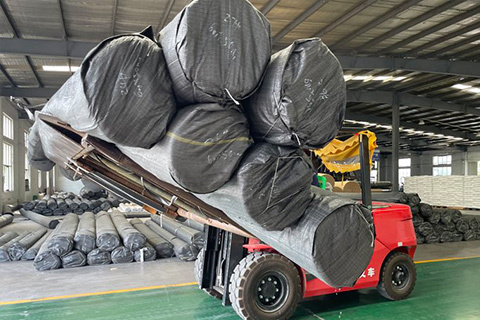
Filament geotextile: Made of filament polyester (PET) fiber. Filament fibers are made into geotextiles through processes such as spinning, web laying and needle punching. It has a continuous fiber structure and the fiber length is basically unchanged.
Short-fiber geotextile: Made of short-fiber polyester (PET) or polypropylene (PP) fibers. Short fibers are made into geotextiles through processes such as mesh laying and needle punching. The fiber length is short, usually between tens to hundreds of millimeters.
 |
 |
Performance features
Filament geotextile: high strength, breaking strength and tear strength.
Excellent tensile resistance and low elongation.
It has good durability, acid and alkali resistance, corrosion resistance and aging resistance.
It has good water permeability and remarkable drainage effect.
Light weight and easy to construct.
Short filament geotextile: lower strength, but still has good tensile resistance.
It has a large elongation rate and a certain degree of flexibility.
It has good acid and alkali resistance and corrosion resistance, but is slightly lower than filament geotextiles.
The water permeability is good, but slightly inferior to filament geotextile.
The cost is lower and the economy is higher.
 |
 |
 |
Application areas Performance features
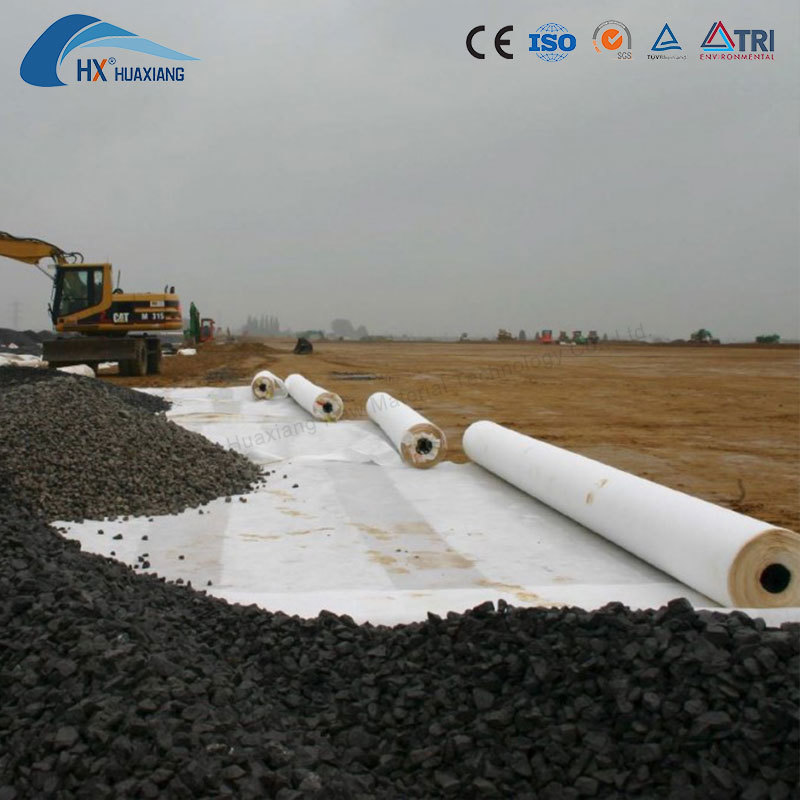
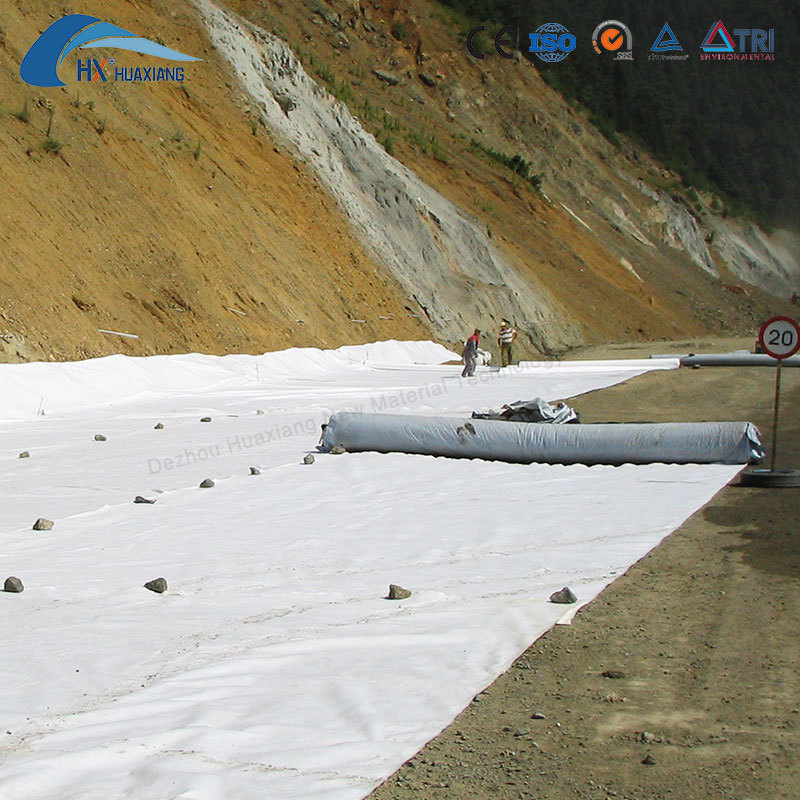
Filament geotextiles: suitable for high-demand engineering projects, such as highways, railways, airport runways, dams, etc.
It is often used to reinforce foundations, slope protection, anti-seepage projects, drainage systems, etc.
Due to its high strength and durability, it is particularly suitable for long-term projects and high-load environments.
Short filament geotextile: suitable for general engineering projects, such as ordinary roads, parking lots, squares, etc.
Commonly used for soil isolation, filtration, drainage, slope protection, etc.
Due to its lower cost, it is suitable for projects with limited budgets and short-term projects.
Filament geotextiles and short-filament geotextiles each have their own advantages and disadvantages, and the selection should be made reasonably based on specific project needs and environmental conditions. Filament geotextiles are more suitable for high-strength, long-term and high-durability projects, while short-filament geotextiles have advantages in economy and general applications.
PROJECT CASES

Apr 25,2024
Apr 25,2024
Apr 25,2024
Apr 25,2024
Apr 25,2024
Apr 25,2024
Apr 25,2024
Apr 25,2024

Get a quote or fast support
Experienced teams of project experts will provide you with competitive quotes, best service and free samples.
Contact us now
CONTACT US
Tel : +86-158 5345 5188
WhatsApp : +86-158 5345 5188
Wechat : +86-158 5345 5188
Email : Selina@dzhxchina.com
Factory Address: South head of Xingguo Street, Lingcheng District Economic Development Zone, Dezhou City, Shandong, China